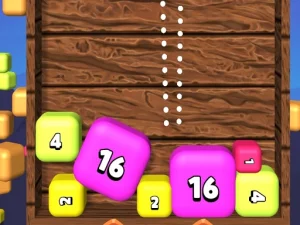
A grid with changing colour layers
Square Sort Mania uses square blocks containing several coloured layers. When adjacent outer colours match, those layers can disappear and reveal different colours underneath. A placement can therefore change more than the two visible edges that first attracted your attention. Before dropping a square, look at its exposed colour and the neighbouring blocks, then consider the colours likely to become exposed next. The aim is to make a useful sequence, rather than match an attractive pair without checking the surrounding grid.
Try to distinguish an immediate match from a placement that keeps later options open. Filling a convenient slot may create a pop now but leave awkward neighbours afterward. A more helpful habit is to inspect the local area before each drop. You do not need to predict an entire session; understanding the next colour change already gives the decision more structure. Use the game's own placement feedback to learn which spaces are valid.
A tower that responds to placement
Fragile Balance asks you to drop brick blocks onto a narrow platform and keep the growing structure from collapsing. The position of a drop matters because the tower must remain stable as it gets taller. Watch the supporting surface before releasing another block. If the structure is leaning or moving, another rushed placement can make the situation harder to read. Choose a clear landing position and observe the result before deciding where to place the next block.
The comparison with Square Sort Mania is useful: a visually tidy arrangement is not automatically a good move in both games. In the colour puzzle, relationships between neighbouring layers matter. In the tower game, support and placement matter. Decide which of those questions sounds appealing before opening a card. That makes this mixed web collection easier to use than treating every bright block image as the same kind of puzzle.
Find the right pace among the cards
Other entries shown here include Dino T Rex 3D Run, Modern Bus Simulator Games, Monster Truck Stunt Racer and Thief Puzzle Online. They broaden the page beyond block placement. Read the selected title's controls and objective before expecting the same drag, release or directional input. Some cards invite repeated reactions, while others make more room for examining a situation. The collection name describes where you browse; the individual game determines what you do.
If the layered-colour example interests you most, explore the wider Puzzle category for more arrangement and reasoning challenges. If you prefer a short repeated action such as judging a drop, the Arcade collection is another useful route. Choose the link according to the interaction you want, rather than assuming that every game in either category has identical mechanics.
Improve one decision at a time
After a chain fails to develop, review the neighbouring colours that remained after the first match. After a tower falls, review the placement that left the weakest support. These are observable causes you can use on the next attempt. Changing one decision gives you a clearer comparison than switching games after every imperfect result. A brief session can still be productive when it answers one small question about how a mechanic behaves.
Check the game's visible input prompts on your device, especially for actions that involve holding or dragging. A single click, a drag and a release are different instructions. Make a small test input before filling a valuable grid space or adding a difficult block. Once you understand the response, you can concentrate on the puzzle or balance challenge itself.