Choose the kind of problem you want
Some puzzles give you time to inspect the whole board. Others make timing part of the solution. In Cut The Rope, a suspended candy must reach Om Nom, and its motion after release matters. In Bloxorz, the block's position and orientation determine whether the next roll is safe. These are useful examples of the difference between predicting a trajectory and planning a discrete sequence of board states.
Observe, predict and test
Before acting, identify what counts as completion and what would cause a failed attempt. Make one prediction about the next action, then compare it with what happens. If the outcome differs, change the first mistaken step instead of restarting with an unrelated guess. A failed attempt can eliminate an impossible approach or reveal a mechanic you had misunderstood.
Use visible instructions for controls, hints, undo and restarting. Those tools vary between games; a keyboard shortcut from one title should not be assumed in another. On touch screens, keep the destination visible and avoid gestures that affect neighboring objects. On keyboard puzzles, short presses make it easier to stop at the intended state.
Find a useful next session
Choose one skill to practice, such as tracing a path backward, keeping a temporary space available or releasing an object at a repeatable cue. The Cut the Rope planning guide offers a detailed example of learning from trajectories and near misses. Return to the collection when you want to apply careful observation to a different kind of puzzle.
Use a prediction that can be checked
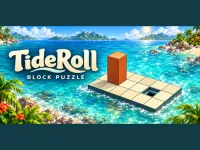
In a position-based puzzle, describe the next state before making the move. For Bloxorz, that means considering both the block's location and how it will stand after the roll. A route that looks open may still require an orientation you have not yet arranged. Work through the immediate consequence rather than treating the destination square as the only information that matters.
For a physical sequence such as Cut The Rope, inspect what will still support the candy after a release and where motion is likely to take it. A good observation follows the movement through its result. If the candy nearly reaches the target, a small change to timing or release order may provide a more informative test than replacing the whole plan with an unrelated guess.
Separate the failed step from the useful plan
A longer solution can contain several correct decisions before one mistaken action. Identify that first mistake and preserve the part that worked. This keeps the next attempt focused. If the selected game provides restarting or undo, use its visible controls to return to a useful point; do not assume that every puzzle offers the same recovery option.
When progress is difficult to judge, compare your current state with the stated completion condition. Perhaps an object is in the right area but arranged incorrectly, or a route reaches the target without satisfying another visible requirement. Checking that relationship can reveal a more specific problem than simply deciding that the whole solution was wrong.
Choose a problem that fits your session
For a short visit, try to understand one unfamiliar mechanic or complete a small, clearly explained layout. With more time, follow the selected game's progression and reread the conditions as they change. A useful stopping point is one where you can explain what you learned, rather than relying only on how many repeated attempts the session contained.