Racing and exploring require different plans
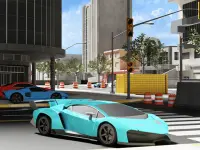
City Car Stunt 4 offers a useful example because it separates race routes from a Free Driving map. The races put you against AI opponents across twelve routes. Free driving gives you space to explore the city and look for diamonds, bonus boxes and blue teleport points. A successful race and a productive exploration run therefore do not need the same route or the same approach to speed.
When racing, learn where the next turn begins and what the road asks you to do immediately afterward. A fast approach is only helpful if you can still place the car accurately through the following section. Use an early attempt to recognise the route. On the next one, choose a particular corner or landing to improve rather than treating the whole course as one undifferentiated sprint.
On a free-driving map, decide what you are trying to reach. In City Car Stunt 4, the blue teleport points provide access toward the hills, while buildings create higher places to investigate. Before aiming for a rooftop, look for a surface where the car can land and remain under control. Reaching the height is only part of the decision; the position and direction of the landing also matter.
Read the vehicle's response before adding speed
Use the first clear stretch to learn what a steering input does. Notice how much the car changes direction and how much room you need for a correction. Then approach a turn with that response in mind. If you overshoot, identify whether you began turning too late, carried too much speed or tried to correct too abruptly. Each explanation suggests a different change for the next attempt.
For the first driver in City Car Stunt 4, movement uses the arrows; N activates nitro and B provides the rear view. The second driver steers with WASD, activates nitro with T and looks back with C. Pressing R restarts the level. These mappings belong to that game. Other entries in the collection can use different keys or on-screen controls, so check before applying the same button sequence elsewhere.
In a shared-keyboard session, agree on which side each person controls before starting. Keep the two nitro keys clear as well as the movement keys. Practising a short section together can be more useful than immediately trying to win, because both drivers can learn how much room the vehicles need without confusing one another's inputs.
Pick the session by the decision you enjoy
If careful positioning interests you, inspect the parking and handling titles in the cards. If a jump is the attraction, look for a stunt game and read how its particular course works. The thumbnail alone cannot tell you whether the task is timed, whether a vehicle can be changed or whether another player is supported. Let the individual page and the game's own instructions establish those details.
For a change from car handling, the Arcade collection includes other movement and timing challenges. Returning to a car after a different kind of game can also help you notice the distinction between a measured steering correction and a rapid reaction. Choose a new objective when you want variety, while keeping the controls and success conditions of the current game separate from the last one you played.