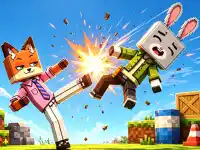
See how the movement affects your next action
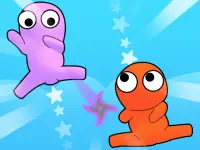
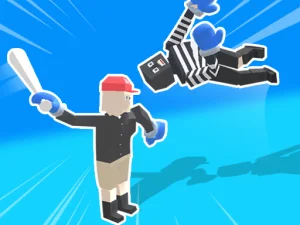
Boxing Random gives the player one input for a boxer who is already moving. Watch the direction of the lean and the distance to the opponent. If you press while the boxer is moving away, the resulting action can look very different from an input made while the body is facing forward. That observation helps you decide when pressing makes sense and when waiting gives you a clearer chance.
In a local match, make sure each player knows their W or Up Arrow assignment. Then watch a single exchange and notice what happened before the punch. If a move falls short, look for a position from which the glove would have reached. If the motion goes in the wrong direction, inspect the posture at the moment of input. Those are different problems even if both end without a hit.
Distinguish the physics from the goal
A character can swing, fall or change direction in both a duel and an obstacle game, but the movement is only meaningful in relation to the task. In a contest, ask whether the motion moves you into range or keeps you clear of the other player. In a rescue or obstacle game, read what the level asks you to protect or reach. An exaggerated motion may be amusing without being useful for what you are trying to finish.
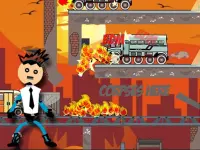
The collection includes a Save the Guy card alongside Boxing Random and other titles. Check the on-screen objective for the game you choose. A new game may want a different gesture, allow a different way to recover, or define a successful attempt in a different way. Do not copy Boxing Random's controls to a rescue challenge just because the characters look loose or bend in ways that are hard to predict.
Use one observation per retry
When a round goes wrong, start with what the character was doing before you acted. Were they close to another body or obstacle? Was there room to stop afterward? Did the contact change their direction before you tried the next input? These are visible details you can use on a replay. They are more useful than trying to correct every movement at once.
Keep the comparison fair by using a similar starting setup when the game offers one. Boxing Random can change the arena or boxers between rounds, so check what stayed similar before treating an outcome as proof that a different button rhythm helped. If the setup has changed, use the opening to learn what that change means instead of forcing the movement you used in the previous round.
Pick a useful kind of disorder
For a quick local contest, choose a game whose control display both people can understand. For solo play, look for a level objective you can read before taking an action. The Arcade collection gives other approaches when you want a short session with a different kind of timing. Decide what you want to watch on the next attempt: an opponent's movement, space beside an obstacle, or how a character settles after contact. That makes the motion something you can use for the current task rather than a surprising animation you have to ignore.