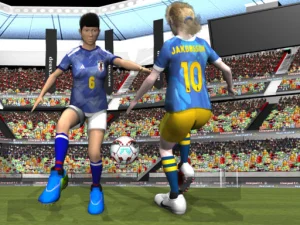
Keep the events separate in Athletics Hero
Athletics Hero presents the 100 metres, javelin and triple jump. Choose an athlete, read the event's prompt and respond to the cues during the attempt. The sprint measures time, while the throws and jumps measure distance. Keep separate observations for each event so a strong running result does not hide uncertainty about a throwing or jumping input. The overall goal is improving performances and competing for medals across the disciplines.
First identify the cue that calls for an action. On another attempt, adjust one timing decision and compare the recorded result. Stay ready for later prompts after the first response in a sequence. The loaded game supplies the relevant keyboard, mouse or touch instruction; a universal shortcut borrowed from another athletics title is not a reliable guide. Let the scene finish loading before judging the timing response.
Connect a pool shot with the next position
8 Ball Shoot It All 3D Pool makes aiming more useful when it serves a plan for the table. Before a shot, identify the legal target, intended pocket, contact line and area where you want the cue ball to stop. A successful pocket can still leave an awkward next turn if the cue ball finishes trapped. Read the loaded mode's rules rather than assuming the title explains every foul or scoring condition.
Begin with moderate power and observe the resulting positions. Stronger strokes create more rebounds, while an overly gentle shot can stop short. Use enough power for the intended result without introducing unnecessary travel. If additional cue effects are available, learn ordinary aiming and strength first. Changing aim, force and effect together makes it difficult to work out why a shot differed from the previous attempt.
Make the result explain the next adjustment
In Athletics Hero, compare a cue response with the event's recorded time or distance. In pool, separate an aiming error from a power or position error. A ball passing a pocket needs a different correction from one that stops before it, while a pocket followed by poor cue-ball placement suggests a route-planning problem. This turns the final result into evidence about a particular part of the attempt.
For table planning, name a next ball and a fallback before shooting when the current rules allow that approach. The alternative gives you something to consider if the cue ball travels farther or stops shorter than expected. Also look at clusters before clearing every easy option nearby. Keeping a useful positioning ball can matter later, especially when planning the approach toward the final object ball.
Pick an event for the attention you want to practise
Athletics Hero suits a session built around recognising prompts and comparing event results. Pool offers a slower sequence in which you inspect a stable arrangement before acting. Both benefit from a manageable practice goal and a familiar play area. If animation becomes uneven during athletics, reduce competing browser activity and make a calibration attempt rather than treating every delayed response as a timing mistake.
The completed Sports category offers other competitions when you want a change. Within this tag, choose the format first and let its actual rules define improvement. The most helpful replay is one in which you know what you intended, observe what happened and can name the one decision worth changing next.