Find the rule before making the first match
Many Mahjong style browser games ask you to remove matching tiles, but a visible symbol is not always selectable. In a layered solitaire board, the useful question is whether a tile is uncovered and has an open side. A different game might use a connection path, a rotating view, or another condition for a pair. Read the rule shown by the individual game before relying on advice learned from a different listing.
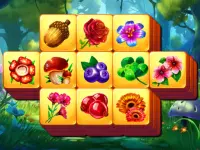
For Classic Mahjong, begin by identifying accessible edge and upper tiles. Look for two selectable pieces with the same symbol, then consider what their removal will uncover. The objective is to keep working toward a clear board while leaving yourself future pairs to use. Do not click a pair solely because it is easy to spot if another pair would open a crowded row or expose a tile underneath it.
Choose a game for the kind of puzzle you want
If you like studying a compact board and planning several moves ahead, the classic layered format is a natural first choice. The puzzle comes from access: a matching piece might be visible but blocked, so a move that opens a side can be more valuable than one that merely reduces the tile count. You can pause after each removal, scan the changed layout, and decide which area needs attention next.
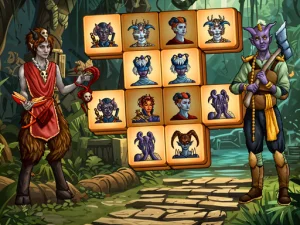
If you would rather compare a different game page, Mahjong Quest is another live title on this site. Its page presents a distinct game and describes a quicker pace. Check its own instructions and frame for the exact rules and available features before playing. The game name alone does not prove that it uses the same board, help tools, or time limit as Classic Mahjong.
The collection also contains Mahjong titles with a three-dimensional presentation. A change in viewing angle can alter how you search for visible matches even when the aim still involves removing tiles. Look at the individual game's controls before expecting a specific rotation button or gesture. This page helps you browse variations; the precise on-screen instructions remain the best guide for each one.
Make a useful first scan
Before you choose a pair, scan the board in three passes. First, identify pieces that can actually be selected. Second, look for symbols with more than one available partner. Third, notice a row or stack that is blocking many other pieces. This scan turns a crowded screen into a set of smaller decisions and helps you avoid spending your first move on a pair that changes very little.
After removing a pair, repeat the scan. The board you studied a moment ago has changed: a neighbor may now have an open side, or a tile beneath the removed pair may be visible. Pausing for this update is especially helpful when you have several similar symbols on screen. Keep track of what a move exposes, rather than assuming every matching pair contributes equally to progress.
When the board starts to close down
If available matches become scarce, do not search only for identical artwork. Check why the remaining tiles are blocked. A piece may need its neighbor removed, another may sit under a higher layer, and a promising pair may require two separate opening moves. Identify the obstacle and then search for an available match that clears it.
Some Mahjong games show hints, undo, shuffle, or a timer, and others do not. Use a feature only when you can see it in the version you opened. If no recovery tool is available and a layout becomes stuck, remember the move that narrowed your choices. On another attempt, try opening the blocked area earlier. That concrete adjustment is more helpful than clicking faster at the start.
Compare games without carrying over the wrong advice
A guide for one title can teach a general habit, such as checking accessible tiles and comparing the consequences of two moves. It cannot guarantee the details of another title. For a worked example focused on the site's Classic Mahjong page, read the Classic Mahjong free-tile strategy guide. Use its access and planning ideas when they fit the board in front of you, then return here to browse another game with fresh eyes.
When you compare two listings, ask what actually changes: the layout, the direction from which you view tiles, the pace, or the conditions for selecting a pair. Open the game that matches the experience you want today. A calm layered puzzle and a faster variation can both be enjoyable, but they reward different decisions. The collection works best when you treat each card as its own game rather than one interchangeable version of Mahjong.
Questions players often ask
Why does a matching tile refuse to move?
It may not be free under that game's rules. Check for a covering tile, blocked sides, or another selection condition described in the frame. Also confirm that the game has focus before trying the input again.
Should I always remove a pair at the edge?
Edge pieces are often easy to reach, but an edge match is most useful when it opens a new path. Compare it with other available pairs and look at what each choice releases. The next move matters as much as the current one.
Does every Mahjong game here use the same clock?
No shared time rule should be assumed. The collection includes separate games. Look inside the title you choose to see whether a clock appears and how it affects that particular round.
Start with a game whose rules you can read clearly, test one accessible pair, and notice how the board changes. The useful skill you can carry across the collection is careful observation; the exact controls and extra features belong to each individual game.