Read the arena through a territory game
Paper.io 2 gives that question a clear shape. You begin with a small coloured island. Moving outside it draws a vulnerable trail; reconnecting with your territory closes a loop and claims the enclosed space. An opponent can interrupt that excursion, so the return journey deserves as much thought as the outward movement.
Look for a nearby edge of your island before drawing a long extension. A short rectangle can be easier to bring home than a large outline that carries you past several opponents. The important comparison is between the area you hope to gain and the time during which your trail remains exposed. Expanding farther is a choice with a cost, rather than an automatic improvement.
Watch the surrounding blocks while you move. If you notice an opponent only after committing to a distant corner, your planned return may already be difficult. Check the direction of nearby movement before leaving safety, then look again during the trip. A good opening can change while you are using it.
Use the result to choose your next adjustment
The Paper.io 2 results screen records territory percentage, survival time and opponents eliminated. A run can last longer without claiming much land, or claim space quickly and end soon afterward. Decide which result you want to understand. If survival is the problem, reduce the size of your next loop. If you survive comfortably but barely expand, examine whether your routes keep revisiting the same edge.
Choose a specific moment to review: the first departure from your island, a turn near another block or the final approach back to safety. Comparing that decision with the result is more useful than changing your whole approach after every short attempt. Keep the successful part of the route and adjust the part that created the danger.
Learning the steering also matters. Use the opening space to establish how the block responds to directional input before aiming for a narrow return. An arena can look simple while still demanding careful control. Do not borrow a key mapping from another IO title without checking the game's own play screen.
Choose a different objective when you change games
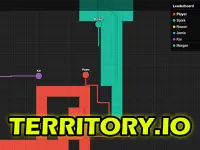
The names and pictures in this collection are a starting point for browsing, not a shared rulebook. A territory game and a snake-themed arena may both involve other moving shapes, but that similarity does not tell you how either one scores, ends or handles contact. Read the instructions for the particular entry before deciding which habit from your previous session still applies.
The IO label alone also does not establish who controls every opponent. Treat online matchmaking, local play and computer-controlled rivals as features of the individual game, rather than promises made by the collection name. The same care applies to accounts, progress saving and mobile controls: use the options actually shown in the game you open.
For a contrasting movement challenge, No One Crash asks you to manage direction in a confined route instead of growing an island. The Arcade category offers a wider selection when you want to explore other forms of timing and movement. Carry over the habit of watching what the next turn changes, while learning each game's objective afresh.