Give the car carrier a controllable route
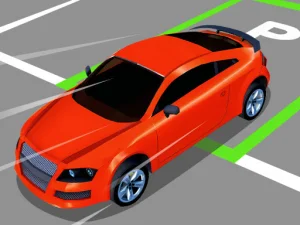
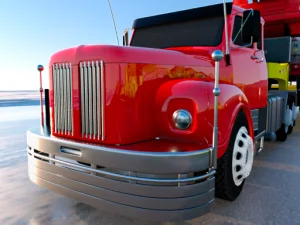
Car Carrier Truck: Highway Master is about delivering cars with a heavy transporter. The supplier also names the game AutoHaul Truck Simulator 3D. Follow the current destination rather than treating the journey as a race for a circuit record. Look beyond the cab toward the bend and the road the rest of the vehicle will need to use.
W or Up accelerates, A/D or the horizontal arrows steer, and S or Down handles braking or reversing according to movement. Test a short stop early in the trip so you understand that response before a close manoeuvre. Begin slowing while there is still room to judge the approach. If the transporter arrives too quickly, stronger steering may leave less space for a correction instead of solving the turn.
After an unsuccessful delivery section, distinguish approach speed, steering and stopping position. Changing one of those gives the next attempt a clearer comparison. A route that becomes awkward at the final bend may have started from an unsuitable position earlier. Inspect that beginning rather than concentrating only on the last contact or missed destination.
Read the terrain in 4x4 Fury
4x4 Fury: Offroad Jeep features mountain roads, mud, rocky hills and desert environments. Missions, jeep models, unlocks and customisation provide further choices. Begin by reading the selected mission and what the terrain ahead requires. An offroad setting does not by itself establish a race against other drivers or a single universal finishing condition.
The listed controls use W or Up to accelerate, S or Down to brake or reverse and A/D or the horizontal arrows to steer. Establish how the chosen jeep responds before committing to a slope or obstacle. Look at the ground beyond the immediate feature, including the space for a turn afterwards. A direction that clears one rock may leave the next section difficult to approach.
When an attempt goes wrong, compare the line across the terrain with the speed and steering used. Those are different possible causes. Read available vehicle options in relation to the current mission rather than assuming a model change automatically resolves a route you have not learned. A smaller adjustment to a known approach makes the effect easier to observe.
Use the view to answer a spatial question
For either vehicle, decide what you need to know before another input: where the road turns, where the larger body will pass or what follows the slope. A three-dimensional view supplies information to inspect rather than a guarantee that every visible gap is usable. Keep the destination and the continuation in the same plan, then judge whether the movement you made served both.
A loaded transporter and an offroad jeep also give the same road feature different context. Check the selected mission's destination and the vehicle response before transferring a movement habit. Learn one turn or slope with the current setup, then compare an adjustment on that familiar section rather than an unrelated route.
The completed 3D category offers other spatial formats beyond driving. Within this tag, choose the task first and use its actual mission prompts to define success. Patient delivery and terrain reading are different ways to practise movement in depth, with each attempt giving a specific approach to refine rather than a reason to repeat every input more forcefully.