Separate racing from free driving
City Car Stunt 4 combines AI racing across twelve routes with a Free Driving map. Its one-player and two-player options create different ways to use the same vehicle setting. Choose the mode that matches your purpose: a race supplies a competition structure, while free driving gives you room to examine the map's features.
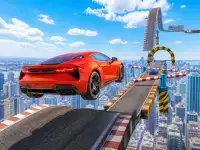
The map includes hills, building roofs, diamonds, bonus boxes and blue teleport points. Those features create possible routes, but an inviting ramp is not a guarantee of a safe landing from every approach. Look at where the car will go after leaving the surface. The landing area and the direction needed afterwards are part of the stunt, not an afterthought.
Player one drives with the arrow keys, uses N for nitro and B to look back. Player two uses WASD, T for nitro and C to look back. R restarts. Establish the controls before a shared session, especially when both players are using one keyboard. A mistaken nitro or steering input can otherwise make a planned approach difficult to interpret.
Build the approach before adding speed
Choose a clear line towards the ramp or feature you want to test. Begin from a position that lets you steer into that line without a last-moment correction. Then observe the first result. If the car misses the intended area, ask whether the problem was alignment, approach speed or the destination you chose. Changing all three together makes the next attempt harder to compare.
Nitro is most useful when you know what the extra speed is intended to achieve. It can also make a poor angle more difficult to recover. Try a manageable approach first, then adjust deliberately. The aim is not to avoid experimentation; it is to make an experiment clear enough that you learn why the vehicle reached or missed the landing area.
After landing, inspect the car's direction and available room. A stunt that reaches a roof but leaves no useful continuation asks a different question from one that joins a route cleanly. In free driving, you can choose whether your next goal is collecting something, exploring a connection or repeating a more controlled landing.
Keep upgrades attached to a purpose
City Car Stunt 4 includes cars, upgrades and customisation. Read the options offered by the current menu rather than assuming every visual change affects performance. If you are considering an upgrade, connect it with a problem you have observed in a particular mode. Equipment choices are easier to judge when you have a familiar route for comparison.
For a competition-focused session, the Racing category offers another set of choices. If you want to concentrate more broadly on vehicle handling, browse the Driving category. Each title still defines its own recovery controls, mode structure and vehicle behaviour, so take a moment to learn those differences before attempting an ambitious move.
Choose a stunt you can repeat
A successful single jump can be exciting, but a repeatable approach gives you more control over the next one. Name the starting point, the line and the intended landing before trying again. Carry that habit through the other cards on this page while treating their own ramps and controls as new information. The collection supplies the setting; your plan makes the manoeuvre understandable.
In a two-player session, agree on the mode before comparing results. A free-driving exploration and a structured race offer different evidence of success. Decide whether you are practising the same manoeuvre, collecting items or trying to finish ahead, then judge the driving against that purpose.