Choose the timed escape for two players
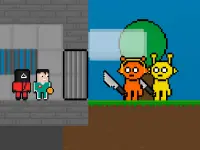
Squid Obby Game 2Player asks both characters to collect all the shapes and reach the helicopter within a 40-second countdown. The two keyboard control sets are WASD and the arrow keys. Before moving, check which set belongs to which character. On a shared screen, identify the next shape and the route the other character needs, not only the path you want to take yourself.
Look for the red-uniformed pursuers as you plan the approach. If one player gets through a section, check what the other player will face at the time they arrive. Avoid both doubling back for a shape that one person can collect along their route. If the level ends on the countdown, identify which arrival or item was delayed. That gives you a change to test rather than a general reason to rush.
Read a different challenge by its current cue
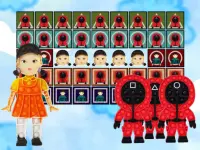
The collection also shows cards such as Dalgona Memory, Squid Game Jigsaw, Squid Hidden Signs and several titles that refer to red and green lights. A memory or jigsaw card suggests a different task from a race. Before acting, read what the game asks you to remember, arrange or watch. Treat any timer, control or repeat pattern as specific to the version you have loaded.
If you choose a stop-and-go title, identify the signal shown in that game before judging when to move. A cue you learned in a previous game can give you a useful question to ask, but it cannot substitute for the display in front of you. In a puzzle, inspect the available positions or symbols. The useful change is to read the right information for that objective, not to assume the themed cards share a level sequence.
Make a shared run easier to explain
In a cooperative game, agree which character is going toward the next item. Use a visible landmark when one person needs to warn the other. “Wait at the corner” is easier to act on than a general instruction to go faster if you have both identified the same corner. After the attempt, describe the first delay that mattered instead of listing every movement that looked awkward.
When the next run starts, keep the part of the opening that worked. Change the route to one missed shape, the timing near a pursuer or the coordination before the helicopter. The guide to cooperative Squid games compares this timed escape with a separate collection objective. Use that comparison to decide whether the next session should involve a clock or a map you can inspect for items.
Choose a short round or a longer problem
Pick a card whose first objective fits your break and the input you have available. A team escape is a good choice when both people can make decisions together. A puzzle can be easier to start alone when you want to concentrate on an arrangement. Browse the Arcade category if you want a change of theme while keeping a clear action to practise. Each game should tell you what it expects from the first round; let that guide the choice.
If you are comparing two cards, try the opening action in each and keep the one whose objective you can explain to the other player.