Choose a game by the type of challenge
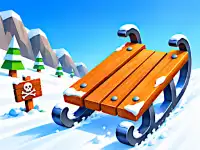
If you want to practise route reading and controlled steering, start with Downhill Snowboard. Its useful decisions involve looking ahead, choosing open space, and avoiding a sequence of late corrections. Other pages in the collection may place more attention on racing, jumps, characters, or obstacle courses. The title, description, and live play instructions are the best way to distinguish them.
Do not use the word "unblocked" as evidence that every game is technically identical or accessible on every network. It is a search and collection label. A school, office, device owner, or network administrator may still control access. CrazyGamesOnline does not guarantee that external network restrictions will be bypassed.
Learn the controls before chasing a score
Use the opening moments to test how the current game responds. Tap a direction briefly, release it, and observe the distance travelled. On touch devices, identify the active control area so the page does not scroll when you intend to steer. A short test makes later turns easier to predict and separates normal control sensitivity from a browser loading problem.
Once the response feels clear, look farther down the route. A rider is easier to guide when the next gap is already visible. Avoid staring only at the character or the nearest collectible. Plan an approach, pass the immediate object, and leave an exit that provides room for the following decision.
Balance speed with control
Winter games often feel more exciting as the pace rises, but speed reduces the time available for corrections. Begin each turn earlier instead of holding a direction longer. Small inputs help preserve a stable line and reduce the oscillation caused by rapid left-right reactions.
If the game offers collectibles, upgrades, or unlocks, verify those features on that game page. When they are present, prefer items close to a safe route. Missing one object is usually better than ending the attempt. Consistent runs can produce more opportunities than one reckless sprint.
Use the open space around an obstacle
Focus on the gap rather than the hazard. Aim for the centre of the safe opening and align before reaching a narrow passage. When several objects appear, deal with the nearest one while keeping the next route in view. Trying to solve the whole slope in one sudden movement is less reliable than a sequence of deliberate choices.
After a mistake, decide whether a large correction is actually needed. If there is still clear snow ahead, adjust gradually. Release the direction when the rider is returning to a useful line, then prepare for the next section. Recovery should reduce the problem, not move it to the opposite side.
Practise with a purpose
Give each attempt one objective. First learn the controls. Next practise staying near a neutral position. Then work on looking ahead or collecting only safe items. Focused attempts make it easier to notice improvement than repeatedly restarting without changing the plan.
The snowboarding games guide provides a five-run training routine and more detail about route choice, momentum, recovery, keyboard play, and touch controls. Use it as general strategy, then adapt the advice to the instructions shown by the game you select.
Keep browser performance predictable
Close demanding background tabs if movement appears uneven. Let the play frame finish loading, keep it visible, and avoid resizing during an attempt. If the game does not respond, confirm that the play area has focus before assuming the controls are broken. On mobile, use a stable orientation and keep unintended browser gestures away from the control area.
What this collection can and cannot tell you
The collection helps you find related winter pages, but it does not prove that every card is a snowboard simulation. Listings can change as games are added or classified. Verify the individual title and objective before playing. The safest shared advice is to learn the current controls, read the route early, preserve an exit, and favour deliberate corrections over panic inputs.