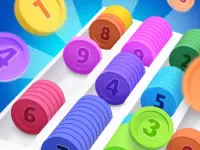
Sliding-puzzle games challenge players to rearrange pieces to form a complete image or pattern. These games require logical thinking and strategic planning to complete objectives. Players must often manipulate pieces within a confined space while adhering to specific rules. Sliding-puzzle games provide a unique test of spatial awareness and problem-solving skills.
Last Updated:
General Info: sliding-puzzle games
How to play involves moving pieces to match patterns (promptly slide pieces to their correct positions).
Technical Overview
These games typically feature a grid where players must slide pieces into the correct configuration. The objective is to arrange all pieces in a specific order or shape, often with limited moves. Sliding-puzzle games can vary in size and complexity, presenting players with different configurations to solve.
Strategic Guidance
To excel in sliding-puzzle games, players should focus on observing the arrangement of pieces. It is essential to plan moves ahead and anticipate how each action affects the overall configuration. Prioritize moving pieces strategically to avoid unnecessary obstacles that can complicate the solution.
sliding-puzzle Player FAQ
Q: What are the controls? A: Controls involve sliding pieces within the grid. Q: What is the objective? A: Arrange pieces to form a complete image or pattern. Q: Is there touchscreen and tablet support? A: Many games support touchscreen and tablet functionality. Q: What is the primary mechanic? A: The primary mechanic is sliding pieces to match configurations.