Track one face as you rotate
Rubic Cube lets you rotate slices of a colored cube. Choose a small size while you are learning the screen controls. Establish the face you are looking at, identify one tile near its edge, and make a single turn. Look at that face and its neighbors again. Keeping a particular tile in mind lets you tell the difference between turning a slice and changing your view of the whole cube.
When you begin to bring colors together, think about which neighboring strip will move with the face you are turning. A move that improves the side you are watching may carry an edge out of a promising position on the next side. Use a pair of tiles as a small target and pay attention to what happens to them. If a move takes one away from the other, try reversing it and tracing the path again. Learning to undo a change on purpose helps you explore with more confidence.
As you move to larger cubes, the number of similar strips increases. Slow down and check which pair of boundaries marks the slice you mean to drag. Shift the view if your pointer falls too close to another row. A clean rotation is the first useful part of a solution, and getting the right slice can be an accomplishment in its own right on a crowded face.
Leave space for the number you make
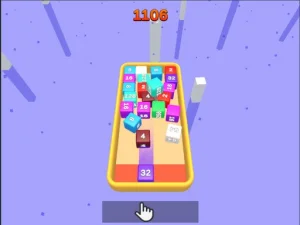
In 2048 Cube Shooting Merge, you shoot cubes into a field where matching numbers can merge. Before you launch, read the number on the piece and find a target. Consider the cubes between the launcher and that target. A clear direct approach gives you a better chance of learning how the movement works. A crowded path may have several points where a bounce can change the result.
After a merge, see where the larger cube comes to rest. Its position matters because you will need to reach it again. Leaving an open approach to one high-number cube can be more useful than making another small match in front of it. If you must add a cube without a match ready, look for somewhere it can wait without blocking the numbers you reach most often.
Avoid using consecutive shots to disguise an awkward position. Take one shot, watch the blocks settle, and decide from the new arrangement. If a target ended up tucked behind another number, aim to clear the obstruction or build the next matching cube from an open side. The useful information is the final resting place, even when you thought the shot looked right at launch.
Decide how much movement you want
Pick the rotating cube when you want time to inspect the object and reverse individual choices. Pick the shooter when you want to combine number recognition with aiming and recovery after a bounce. For a first session, spend a few minutes on a target small enough to observe. Rotate one strip and explain where a tile went, or make a match and still have a clear line to the result.
Other games in the collection add towers, moving routes, and different board sizes. Check the instructions on the particular card, especially if you are playing with touch. A small difference in how you drag or aim changes the kinds of choices you can make comfortably, even when the colored blocks look familiar.