Aim for useful contacts in a number puzzle
99 Balls builds its challenge around numbered targets and repeated contacts. Scan the lower part of the board before concentrating on a large number farther away. A low target can restrict the next launch or remove a useful side lane, making its position more urgent than its value alone suggests.
A direct shot and a bank shot serve different purposes. A direct contact can deal with an immediate obstruction. A route that enters a side corridor may keep the balls moving through more targets. Compare what the first collision is likely to do, because a promising line can lose its value if it returns the volley immediately toward the bottom.
Use a forgiving angle while learning the response. Very thin approaches can change noticeably with a small movement of the aim. After the volley, inspect the new launch position and target arrangement instead of repeating an old screen coordinate. The board you must solve is the one that remains now.
If a bonus is visible, consider whether collecting it can be combined with productive contacts. Do not leave an urgent low target untouched solely to reach something useful later. A practical launch that opens one corridor can be more valuable than a visually impressive angle that leaves the immediate obstruction unchanged.
Build momentum for a destructive impact
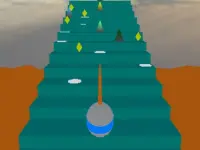
Crash Core uses a rolling core to break crates, walls, containers and machinery. Destruction supplies Scrap, and upgrades grow the Core so that it can tackle stronger obstacles. Here the route before contact matters because it helps you build speed and direct the next impact.
On a computer, steer with WASD, the arrows or mouse dragging. On mobile, drag to steer. Begin with a clear approach and notice how much space a correction needs. A fast run toward an object is useful only if the core can still reach the intended target rather than glancing past it.
The provider recommends chaining destruction for larger combos. Look beyond the nearest object and judge whether several targets lie on a workable route. If a stronger obstacle resists the current Core, inspect the available upgrades rather than repeating an identical collision indefinitely. Read the choices shown instead of assuming a universal best purchase.
Observe what happens after the first impact
In both examples, the first contact changes the next decision. A rebound redirects a volley; a broken object opens space for a rolling core. Follow that change before planning the following input. Acting on an arrangement that no longer exists can make a reasonable initial plan fail later.
Choose an experiment you can evaluate. In the number puzzle, move the aim slightly and compare the first rebound. In the destruction game, adjust the approach or the point where you begin steering. Keep the successful part of the route while testing the uncertain part, rather than replacing every decision at once.
Browse by the kind of motion you enjoy
The completed Arcade category includes other games built around immediate feedback. Use this ball collection when you want to read trajectories and collisions, and check each selected game's objective before carrying a shooting or steering technique across to a different format.
Keep a visual reference for the first contact you intended. Comparing that point with the actual collision helps distinguish inaccurate aim from a route that was unsuitable even when executed correctly.