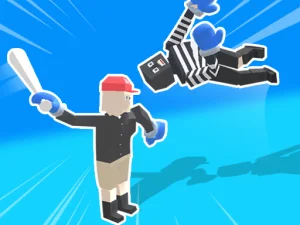
Change the environment around the character
Puppetman: Ragdoll Puzzle gives you a character and a level where objects can affect how he reaches a safe landing. Inspect where he starts and where you want him to end up. Look for the first object his path could meet. A small change there can affect the rest of the sequence, so try to get a clear view of it before making your first move.
Make one change and watch the level play out. Seeing the first contact is more useful than only looking at the final position. If the character reaches the wrong side of an object, compare its position with the route you meant to create. If the first contact works and the landing still fails, look at what happens between them. You may be able to keep the first part and change something closer to the end.
When a level contains several moving parts, pick the one you can read most easily. Try a placement that gives you a chance to see its effect. Then work on the next object if you need a different landing. Repeating a move is a practical way to see whether it gives a consistent result. You get a better comparison if the rest of the scene stays the same for that attempt.
Give a moving character time to settle
Ragdoll Step asks you to guide a character through levels with obstacles. The body can take time to settle after an input. Try a single movement in the opening area and watch where the character ends up. Look at what happens to the whole body as well as the part that first moved. Once you have a reference for that motion, it is easier to judge when to give the next input.
Use a line in the level or a platform edge as a reference. As the character approaches it, look far enough ahead to see the available landing space. If the scene still shows movement from the previous input, give it a moment and check which parts are supported. The next movement may be easier to judge once you can see the character's position clearly.
When a section goes wrong, decide where the motion first looked different from what you expected. If the character was already unsteady before an obstacle, try working on the approach. If the first movement was clean, check the support on the other side. Choose one of those details to watch on the next run. You may see progress even if the same section still takes another try.
Decide whether to control a route or a setup
Choose the puzzle game if you want to inspect a level and change what the character meets along the way. Try a moving platform challenge if you enjoy working out when an input has finished taking effect. A useful short goal is to reach a landing you can explain or take one step you can repeat when the next obstacle appears.
For other games that reward reading how one move changes a board or scene, visit the Puzzle category. Open whichever card interests you and test the controls in the first level. The physics become easier to follow when you can track one motion from the start of the input to the place where everything stops.