Allow a dropping puzzle to settle
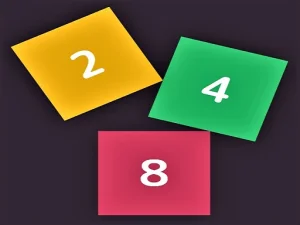
2048 Cubes combines equal numbered blocks in a pile. The pieces move and bounce rather than occupying fixed grid cells. Choosing a release position therefore creates a trajectory to observe, not a guarantee that the cube will remain directly beneath that position.
Slide the waiting block left or right with the swipe interaction, then release to drop. Inspect a reachable matching number before choosing the line. A piece between the pair can redirect the new cube or leave it resting somewhere less useful. The opening above a target matters as much as the target's value.
Let the collision resolve before judging the result. If several pieces are still moving, an immediate second release can make the arrangement harder to read. Once the pile settles, compare the actual resting positions with your prediction and choose the next drop from that new state.
The dashed line provides a practical limit: filling the board to that height ends the game. A large merge can be helpful, but so can leaving an accessible pocket for a small matching piece. Think about working space when deciding whether to add another object to a crowded area.
Connect momentum with the intended impact
Crash Core asks you to steer a rolling core through destructible objects. Crates, walls, containers and machinery offer targets, while Scrap supports upgrades that grow the Core for stronger obstacles. The route before a collision gives you room to gain speed and direct that speed usefully.
Steer on a computer with WASD, arrows or mouse dragging. On mobile, drag to move and steer. Test a correction in open space before committing to a dense group of objects. A powerful approach is difficult to use if the core reaches the wrong side of the target or has no room to turn afterward.
The provider recommends building speed and chaining destruction for bigger combos. Look for several objects along a workable path, but inspect what the first collision leaves in front of you. A chain still depends on the core reaching each next object in a useful direction.
If an obstacle resists, consider the current Core and the upgrade choices. Repeating the same impact without changing the approach or strength may simply reproduce the same result. Read the available improvements instead of assuming that every target can be broken immediately or that one purchase is always best.
Make a prediction you can test
Before acting, describe the expected result briefly: the cube should reach that partner, or the core should pass through that row of objects. Afterward, identify where the actual motion differed. This turns an unsuccessful attempt into information about aim, approach or available space.
Change one useful variable on the replay. Move the release point a little, begin steering earlier or choose a clearer approach. Keep the part that already worked so that the effect of the correction remains visible.
The completed Arcade category offers further action-and-feedback challenges when you want a different object or objective to control.
Observe the first collision separately from the final resting position. A cube may initially reach the intended area and then bounce away, while a core may clip the edge of an object instead of meeting it squarely. That distinction suggests whether to change the initial aim or the longer approach. Keep the surrounding space in view while judging which explanation fits the attempt.