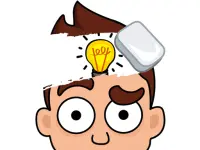
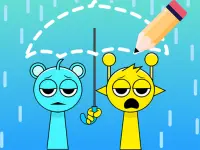
Understand the picture before using the eraser
In Delete Puzzles Erase 1 Part, dragging across the screen removes part of the visible image to uncover what is behind it. This makes the picture itself your source of clues. Study the people, objects and unusual overlaps before moving the pointer. Ask which detail seems to be concealing something or preventing the scene from making sense. The answer may depend on recognising an object rather than performing a complicated sequence of inputs.
Start with an area you can explain. If you think an object is hiding another shape, erase around that object and watch what changes. Sweeping across the entire screen immediately can make it harder to connect a reveal with the clue that led you there. A short, deliberate movement gives you more useful feedback about your interpretation of the picture.
DOP 2 Delete One Part offers another route into this kind of visual reasoning. Treat each new scene as a fresh question. An area that was important in the previous image does not establish a rule for every later puzzle. Read any displayed prompt, inspect the drawing and decide what removal would answer that particular question.
Separate a wrong idea from an inaccurate gesture
When the expected result does not appear, there are two different things to reconsider. You may have chosen the wrong part of the picture, or your gesture may not have covered the intended area. Look at the visible change before deciding which explanation fits. If the correct-looking object remains partly covered, a more controlled movement may help. If the revealed detail contradicts your idea, stop and choose a different explanation.
Keep the pointer inside the game area while dragging and allow the scene to respond before making another broad gesture. On a touch screen, your finger can cover the very clue you are trying to inspect; lift it between attempts so you can see the result. Follow the particular game's input instructions rather than assuming that a drawing puzzle and an erasing puzzle use identical actions.
Do not invent a move limit or a timer when the scene does not show one. The useful challenge is deciding what to remove and interpreting the result. A measured approach can make the puzzle more satisfying even when the game allows you to retry freely.
Look for the rule that changed your understanding
After solving a scene, take a moment to identify why that removal worked. Perhaps it exposed a hidden shape, removed a misleading detail or made an object's purpose clearer. Naming that relationship helps you approach the next picture with better questions. It is more useful than remembering only the coordinates where you happened to drag.
The Puzzle category is a useful next stop when you want visual reasoning with other kinds of rules. For a specific change of pace, Bloxorz asks you to plan a block's position on a platform. Its challenge comes from movement and orientation, giving you a different way to test the same habit of considering a consequence before acting.
Choose an erasing game when you want a compact mystery contained in a picture. Choose another puzzle format when you would rather work through a route, arrangement or sequence. Keeping that distinction in mind makes the collection easier to browse and avoids expecting every card to provide the same sort of reveal.