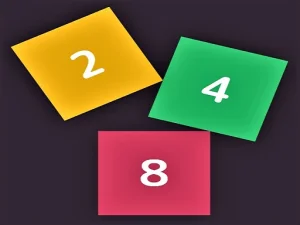
One verified example: dropping numbers in 2048 Cubes
In 2048 Cubes, equal numbered blocks merge into a larger block. The pieces have physics, so they collide and bounce instead of remaining locked into a flat grid. Move the waiting block sideways using the swipe interaction and release it to drop. The important distinction is that you choose a dropping position; you are not issuing four-direction commands to shift an entire board.
Look at the pile before committing to another drop. An exposed matching block may be easier to approach than one surrounded by different numbers. Imagine which piece your new block will meet first, then watch the actual result. A collision can change several positions, so use the settled arrangement as the starting point for your next decision rather than continuing a plan made before everything moved.
Balance a larger number with usable space
The dashed line gives the number puzzle a clear limit: filling the board to that height ends the game. A large block is satisfying, but the available room around it still matters. Before dropping over a crowded section, check whether another opening gives a small matching pair a chance to meet. An immediate placement can be convenient while making a later matching piece harder to reach.
Take a short pause after a busy collision. Notice which numbers are exposed, which have become buried and where the highest part of the pile now sits. This makes another attempt more purposeful than dropping rapidly whenever a space appears. The provider describes an endless format, so focus on improving your next decision without assuming that one particular number completes a fixed set of stages.
Choose another card by its own task
The names Build with Cubes 2, Rotating Cube and Battle Cubes 3D are also visible in this collection. Their presence does not establish shared controls or a shared scoring system. Open the selected page, identify what the game asks you to achieve and read its instructions before carrying over the number puzzle's dropping gesture. A familiar object can belong to a very different activity.
If you want a session with time to inspect a board, look for that quality in the chosen game's actual rules. If you prefer movement or a more immediate response, check the opening controls and objective instead of deciding from the cube theme alone. Device support should also be checked for the individual entry. The mobile support of one game does not establish the behaviour of every other card.
Review one decision instead of the whole score
Compare two possible dropping positions before choosing. Ask which matching block each could reach and which part of the pile would receive an unrelated number if the intended contact does not happen. This gives the placement a clear reason. After the collision, check that reason against the arrangement you actually have.
After a difficult attempt, describe the earliest choice that changed the situation. In the number-merging example, it might be a drop that covered a useful block or a second input made while the pile was still moving. On another attempt, adjust that decision and observe the difference. Keeping the question small makes it easier to separate an aiming issue from a poor placement choice.
The cube puzzle guide develops that approach and compares dropping numbers with a separate block-rolling game. For a broader collection organised around problem solving, visit Puzzle games. Choose the format that interests you, learn its exact controls and let the visible result guide the next move.