Collect blocks for a route to the next floor
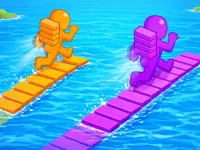
Bridge Race combines collecting with racing. Gather blocks of your own colour and use them to build stairs towards the next floor. Other competitors are progressing as well, and the aim is to reach the last level. The carried stack is the resource that supports the climb, rather than a score target that replaces the finish.
The provider lists slide-to-play controls. Test a short movement in the loaded version, identify your colour and choose a nearby collection group. Then return towards a stair approach and watch how the resource becomes progress. Learning one complete gather-and-build loop makes the next trip easier to plan than trying to sweep up every visible block at once.
Judge the complete collection trip
A distant patch can offer many matching blocks while requiring an awkward return. Compare the whole journey: approach the resource, gather what you need and reach a stair route where the load can help. A smaller collection near a useful climb can be a sensible choice when it leaves a clearer continuation.
Before taking another detour, decide what it will add to the trip. Repeatedly chasing an isolated nearby block can pull you away from the stairs without a deliberate plan. Choose the last group in the current collection loop, then make the return decision. You can judge afterward whether that load and route were useful.
There is no fixed load count that this description assumes will solve every section. Read the current layout and the progress your collected blocks produce. If you arrive short of what the route needs, use the remaining climb to plan another purposeful trip. If you gather for too long, compare a shorter loop on the next attempt.
Review the approach as competitors move
Competitors can encroach on your stairs, so do not treat a partly built route as permanently secure. Watch the approach while deciding where to spend the load. Their movement is information about the shared space, but copying their collection path may be unhelpful because their colour and resources differ from yours.
When you reach a new floor, inspect it before repeating your opening route automatically. Locate matching blocks, identify the next climb and notice the current competition. The basic loop remains the same, while the useful direction and trip length can change. That is where a brief review can prevent a successful start from becoming a poor continuation.
Distinguish racing from other bridge activities
Cards such as Draw Bridge Puzzle and Bridge Builder signal a different kind of task from carrying coloured blocks up stairs. Read the individual description before choosing whether you want route drawing, structural planning or a resource race. A shared bridge theme does not establish identical physics, controls or winning conditions across these activities.
The collection's “unblocked” label also does not guarantee that a particular network permits every embedded game. Use an allowed connection and let the selected title reach its own play screen. If the surrounding page is ready but the game frame is still loading, wait for the game's actual prompts before testing input.
Practise one connected loop
The Bridge Race gathering and building guide develops route choices, load decisions and review between floors. It applies to the specific coloured-block race, while other collection games deserve their own instructions. Use it when that is the objective you selected rather than transfer every step to another bridge title.
For broader short-session activities, browse the arcade category. In Bridge Race, give the next trip one clear intention: collect the correct colour along a manageable route and convert that resource into a useful climb. Review the outcome before deciding whether the following trip needs more blocks, a different return or a new approach.