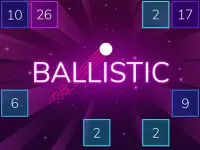
The Ballistic puzzle in this selection
Ballistic asks you to remove numbered blocks before they reach the line at the bottom of the board. Click or tap, drag to aim, and release a volley. A block's number records the hits still required to remove it. After a shot, the surviving blocks move down one row, making the next aiming decision a different problem. You have an opportunity to study the board between volleys rather than needing to fire as quickly as possible.
Additional-ball targets increase the balls available for later shots. Aim for them when the route also makes sense for the board's current risks. A bigger volley becomes more useful when it can reach a cluster and rebound repeatedly, but collecting a target is less helpful if an urgent low block survives to end the run. Compare the immediate threat with the value of improving future shots.
Choose an angle for a purpose
A direct shot gives you a clear first contact. A wall rebound can take the volley across a different part of the board, while a narrow opening may let balls reach space above a cluster. Start by deciding which block or area needs attention. Then trace the first contact and likely rebound before releasing. An attractive-looking bounce is not a useful plan unless it reaches something that matters.
When several blocks sit low, inspect whether a shallow route can contact more than one of them. When the bottom is safer, examine openings toward the upper board. These are different priorities, so do not repeat the same angle automatically after every turn. Our Ballistic aiming and rebound guide develops these decisions with practical examples and explains why a shot's result matters more than its visual complexity.
The other cards offer a change of activity
Use the wider grid when you want a different subject from the block puzzle. It includes strategy-themed names, a card-game entry, a hidden-object title and sports alongside other activities. Read the destination's description and initial screen to establish what the current version asks you to do. The presence of these cards does not create shared controls, a common scoring system or one continuous campaign.
A useful browsing habit is to choose the task before choosing the next title. Decide whether you want to inspect a board, follow an action sequence or try another subject, then open one candidate and read its instructions. If it is not the activity you wanted, return to the collection. Opening several games simultaneously makes it harder to judge loading and input responsiveness, particularly when their interfaces demand different actions.
Check the individual entry before starting
A held press, a released drag and a single click can mean different things in separate games. Give each new entry a small input test after it finishes loading. Ballistic's drag-and-release instruction belongs to Ballistic; it is not a control rule for UNO Card Game, Tower Defense or the rest of this collection. Follow each game's own prompts and device information.
The unblocked wording is part of this page's established name and does not override a restricted network. It also does not guarantee identical performance or touchscreen support across all entries. For the verified bouncing-ball rules described here, use the direct Ballistic link. For a different activity, let the actual destination and starting screen guide your choice.