Grow a trail while choosing safe encounters
Blocktrail 2048 uses arena movement. Collect cubes to increase the number trail, pursue weaker rivals for points and avoid stronger opponents. Your direction matters alongside your current strength: reaching a small rival can still be a poor decision if the pursuit crosses a dangerous part of the arena.
The mouse, WASD or arrows steer, and Space boosts. Practise an ordinary turn before using speed to close a gap. Look at the space beyond a collectible so that you can keep moving after reaching it. The next number is an opportunity to assess, rather than a reason to stop watching the surrounding rivals.
Power-ups and the rare moving Golden Cube can tempt you to change direction. Compare the route toward them with the way out afterward. Breaking off a chase can preserve a useful position when the target moves toward stronger opponents. A boost is easier to use deliberately when you already know the intended exit.
The challenge can continue beyond 2048. Coins also support unlocks such as hats, trails and eight blocky cars. Treat those collection goals separately from learning how to survive an encounter; a cosmetic menu does not explain whether your current trail can safely challenge the opponent ahead.
Drop matching cubes without filling the board
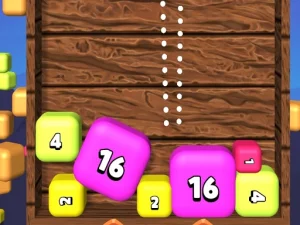
2048 Cubes puts equal numbers into a dropping puzzle. Matching blocks combine into larger ones, but the pieces move and bounce instead of remaining in tidy grid cells. Each collision can change the arrangement, so the result deserves attention before the following drop.
Slide the waiting cube sideways with the swipe interaction, then release it to drop. You choose where the next piece enters the pile; you are not shifting an entire board in four directions. Find a reachable matching number and inspect any object between it and the proposed dropping position.
Wait for movement to settle when possible. A second drop made while blocks are still moving can obscure which collision caused an awkward pile. When the pieces stop, inspect whether the intended match happened, whether a small number became covered and whether another route remains open.
The game ends when the board fills to the dashed line. A higher number represents progress, but working space also matters. Before adding a block over a crowded section, consider whether another position offers a clearer route to a merge. The provider describes an endless format, so a fixed campaign ending should not be assumed.
Choose between pursuit and placement
The arena example asks where your trail can travel safely. The dropping example asks where a cube can settle usefully. Both involve number growth, but one rewards reading moving opponents while the other rewards managing the pile. Choose the kind of uncertainty you want to practise rather than expecting a single solution method.
After a run ends, identify the decision that removed your options: an unnecessary pursuit, an early boost, a blocked matching piece or a drop above an already crowded area. Test a correction to that decision on the next attempt.
The completed Puzzle category provides more board and number challenges when you want a different arrangement to inspect.
Use the end condition to guide a conservative decision. Avoiding a stronger rival preserves an arena run; leaving room below the dashed line preserves a dropping run. A smaller immediate gain can keep a more useful set of future options open.