Check the activity loaded by the selected page
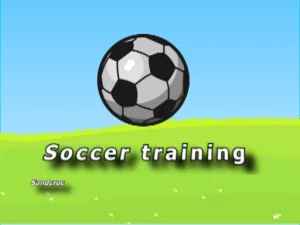
The Goal Finger Soccer page currently loads the Soccer training game. That is a useful distinction when choosing a card: the actual task is keeping a football airborne, collecting points and dealing with obstacles. The provider lists mouse clicks or taps as the interaction, and letting the ball touch the ground ends the attempt. Learn this loaded activity rather than relying on a different game associated with the page title.
Start with a deliberate click or tap and observe how the ball responds. Follow whether it is rising or descending, then relate another input to a situation you can recognise. A familiar football theme does not establish that you will move a player with arrows, pass between team members or choose a shot-power bar. The current game's instructions and visible response are the useful references.
Maintain the bounce while reading the next problem
The ball's movement remains important when a point opportunity or obstacle draws your attention. Before acting, keep track of where the ball is going next as well as the object you want to respond to. A hurried sequence of clicks can make it difficult to understand why an attempt ended. One considered input gives you a clearer connection between the cue you saw and the result.
If an obstacle affects the ball, look at the moment before contact. Had you already noticed the obstruction, or were you concentrating entirely on something else? If the ball reaches the ground, ask whether you recognised its descent late or whether the input itself was unclear. These explanations lead to different adjustments and provide more practical guidance than simply deciding that every action needs to happen faster.
Use a short attempt to answer one question
You can make the opening attempt about understanding the bounce rather than collecting the highest possible total. Notice the response to an action and how much of the next movement you can follow. Afterward, choose one uncertainty to investigate. Perhaps you want to recognise a descent sooner or maintain awareness of the ball when an obstacle appears. Keep the comparison small enough to understand.
Once the basic interaction is clearer, consider points alongside keeping the attempt going. A visible opportunity is not automatically worth losing track of the ball. Let the current arrangement guide that choice. There is no need to invent a score threshold or a guaranteed rhythm to make another attempt worthwhile; a more accurate reading of one difficult moment is useful progress.
Other collection cards have their own rules
Names such as Soccer Clicker Game, Soccer training and Head Soccer 2D 2023 are also visible in the current collection. Treat them as browsing options, then inspect the chosen page. The shared label does not establish identical player numbers, match lengths, input methods or scoring. If you specifically want a match with a friend, confirm its actual player arrangement rather than assuming every football title supplies multiplayer.
When changing games, identify what the input controls before judging the first attempt. It might act on the ball, a player or an opening menu. Then confirm the objective of the current round. This short check keeps a control misunderstanding separate from a difficult football decision.
The soccer timing guide compares the loaded ball-bouncing activity with a separate dribbling challenge. For a broader browsing route, visit the completed Soccer category. Choose the format you want, follow its own instructions and use one clear observation to guide your next attempt.