Follow the acrobat's tutorial in Flip Trickster
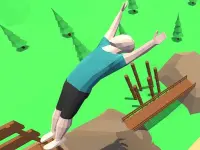
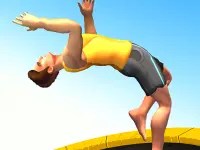
Flip Trickster provides a verified acrobatic example. Its opening tutorial places the character on raised pink blocks and asks you to continue holding to begin the movement. Once the character is airborne, the prompt asks you to touch and hold to tuck. Watch the body change position as you follow the current instruction, keeping the landing area in view.
The character and platforms are shown in three dimensions. Reaching the other surface is only part of the challenge, because the body also needs a usable position at contact. Watch where the feet are heading as well as the movement of the upper body. A jump can look close to success while leaving the character poorly arranged for the finish.
Use distance and posture as separate observations
After an attempt, describe the landing problem precisely. Did the character fall before the platform, travel beyond a useful part of it or reach the surface in an awkward pose? These results point toward different parts of the movement. Keep the opening you understood while investigating the uncertain input, instead of changing every moment and then struggling to explain why the result differs.
The edges of the blocks can help you compare attempts. Notice the character's position when a prompt or input takes effect, then inspect the arrival. Use the reference to understand the current exercise. When the scenery or landing surface changes, look again before assuming the same rhythm will fit. Familiarity with the controls does not remove the need to read a new destination.
Choose another flipping activity by its own objective
The current cards also include Mini Flips Plus, FlipTheGun and Flippin Fingers. Their names offer browsing clues, but they do not prove that the games use the acrobat's hold-and-tuck interaction. A bottle, a character and another object can all rotate while belonging to different tasks. Read the selected page's instructions and identify what must happen for its own attempt or round to succeed.
Check whether you want to practise a landing, inspect a puzzle or try another kind of action. Then choose a card whose actual description matches that interest. Device support and player arrangements also belong to the individual game. The behaviour of one title does not establish that every other entry will use the same mouse, touch or keyboard setup.
Make a retry answer one useful question
For the acrobatic example, an opening question could concern the difference between leaving the platform and tucking in the air. Another could concern whether the feet reach the intended part of the destination. Choose one and watch it deliberately. A short attempt can be useful even when it ends badly, provided you can identify the relationship you were trying to understand.
After a successful landing, ask the same question. Notice which part felt deliberate and which part still needs observation. Success does not automatically explain how a movement worked, just as failure does not mean every part of the attempt was wrong. Keep a specific reference that will help you begin another session with a clearer intention.
The take-off and landing guide develops this approach for Flip Trickster. Browse the completed Sports category when you want a different timing or competition task. Learn the selected game's exact controls and let its visible result guide the next adjustment.