Find the kind of challenge you actually want
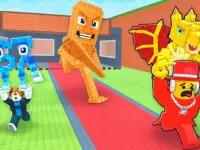
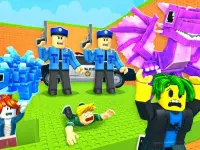
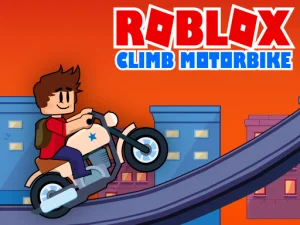
A familiar character style does not make every game in this collection play alike. A jumping course asks you to judge space while moving. A drawing puzzle asks you to decide what the character needs before sending them across a gap. Other cards concern vehicles or character outfits. Read the individual game's description rather than assuming that a familiar name means the same activity.
These are separate browser game pages. The collection name does not establish that a game connects to your Roblox account or carries progress, purchases or items between services. Choose a title for the play shown on its page. An obstacle course can be enjoyable on its own without promising an entire platform's features, social systems or creation tools.
Run across a block-built course
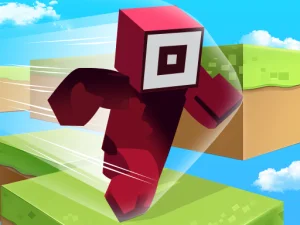
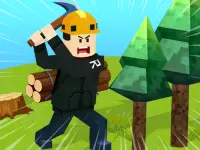
Roblox Craft Run focuses on a character moving through a three-dimensional platform track. Running, jumping, bridges and a maze form the challenge. The publisher lists mouse or tap input. The important first step is to understand how that input affects your movement, rather than assuming that controls from another game will work here.
Use the opening section to learn the spacing between platforms. Look toward the next landing area instead of watching only the character. If the same gap keeps causing trouble, change where you begin the jump rather than adding more inputs in the air. Giving each attempt one clear adjustment helps you distinguish a timing error from a route error.
Draw a route, then use it
Roblox Draw to Escape Online adds a different problem: you draw platforms or barriers to help a character reach the end of a level. There is a time limit, and some objects can disappear or explode. Coins and discovered stars offer additional reasons to explore, but the route still needs to get you safely to the goal.
Separate the drawing decision from the movement decision. First identify what prevents progress; then sketch the smallest useful support or crossing. On a computer, the published controls distinguish the mouse for drawing from A and D for moving. Practise that change of input before attempting a complicated section. A carefully drawn path is only helpful if you can move onto it reliably.
Compare routes by risk, not appearance
In a course-based game, a narrow shortcut can demand a more accurate landing than a longer path. In a drawing game, a large structure can take more attention to place than a small bridge. Ask what each extra movement or line contributes. A route that is easy to understand often gives you a better starting point for improvement than one that merely looks impressive.
Optional pickups create another decision. If reaching an item repeatedly interrupts your progress, learn the main route first and return to the detour after you understand the surrounding space. That is a way to organise practice, not a claim that every title has the same scoring or checkpoint system. Follow the rules displayed by the game you opened.
Choose a comfortable way to play
Check the game's own input guidance on your device. Touch support in one title does not guarantee that another has the same interface. Drawing needs room for a controlled line; movement needs a clear view of the next obstacle. If your hand hides the landing area on a small screen, a larger view may make the route easier to read.
When returning to this collection, use the activity you enjoyed as your guide. Pick another course if you liked learning jumps, or another creative puzzle if you liked changing the environment. The useful connection between these games is how they turn a blocky scene into a readable problem, with different ways to reach a solution.