What the number tells you about this collection
A number in a game title can identify a sequel or form part of its name. It does not explain the rules, the number of people who can play, or whether a keyboard is required. This matters here because the game cards include very different activities. Look at the individual title and its instructions before deciding that a second person can join. A solo puzzle and a shared competitive match need different setups, even when both names contain the same number.
The selection includes titles such as Zombie Survival 2, Flappy Bird 2025 and Voxel Merge 3D alongside the two examples below. Their names help you locate them, but they should not be read as a common set of mechanics. There is no single collection-wide instruction to collect resources, build a base or race another player. Open the game that interests you and identify its actual objective first.
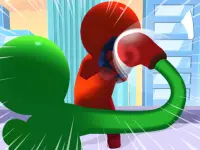
Direct an attack in Curvy Punch 2
In Curvy Punch 2, the distinctive idea is a bending punch. The fist can curve around obstacles on its way to an opponent, so a direct line is not always the useful route. The game also includes a backflip for avoiding attacks. It is an action choice for players who enjoy adjusting a move while responding to a threat.
Before committing to an attack, notice what blocks the route and where the opponent stands. A hurried input can waste an opening if you have not allowed room for the curve. When an attempt fails, separate the route problem from the timing problem: did the punch encounter an obstacle, or did you act at an unhelpful moment? That distinction gives the next attempt a purpose.
Build protection in Stickman Rescue Draw 2 Save
Stickman Rescue Draw 2 Save replaces combat with a drawing challenge. You sketch a line or structure to protect a stickman from hazards. The situations include falling rocks, arrows and gaps, giving your drawing a practical job: block the danger, support the character or provide a crossing.
Study where a hazard comes from before drawing. Think about the shape you need and what will hold it in place. If a design does not protect the character, change one feature rather than covering the screen with extra lines. Adjusting the angle, support or position makes it easier to see why a solution works. The useful comparison with Curvy Punch 2 is direction: one game guides danger toward a target, while the other redirects danger away.
Pick an objective before choosing a control scheme
For a short visit, decide whether you want immediate reactions or time to inspect a scene. Action suits a session in which you are happy to repeat inputs and learn their timing. Drawing suits a session in which you want to pause, consider a layout and revise an idea. Neither choice is automatically easier; they ask for different kinds of attention.
Read the selected game's starting instructions and try a small movement or drawing first. Mouse input, touch input and keyboard support belong to individual games. A device that works comfortably for one title may feel cramped for another, especially when a detailed drawing needs precision. Use the first attempt to learn the interface before judging your result.
Make a replay useful
Set a modest goal for the next run: avoid one repeated collision, make a cleaner route or test a simpler protective shape. Notice the point at which your plan stops working. Returning to that specific decision is more useful than restarting with no change. The value of this mixed tag is the chance to compare how different games reward observation, timing and experimentation.