




















Bubble Shooter Strategy: Better Angles, Matches and Clears
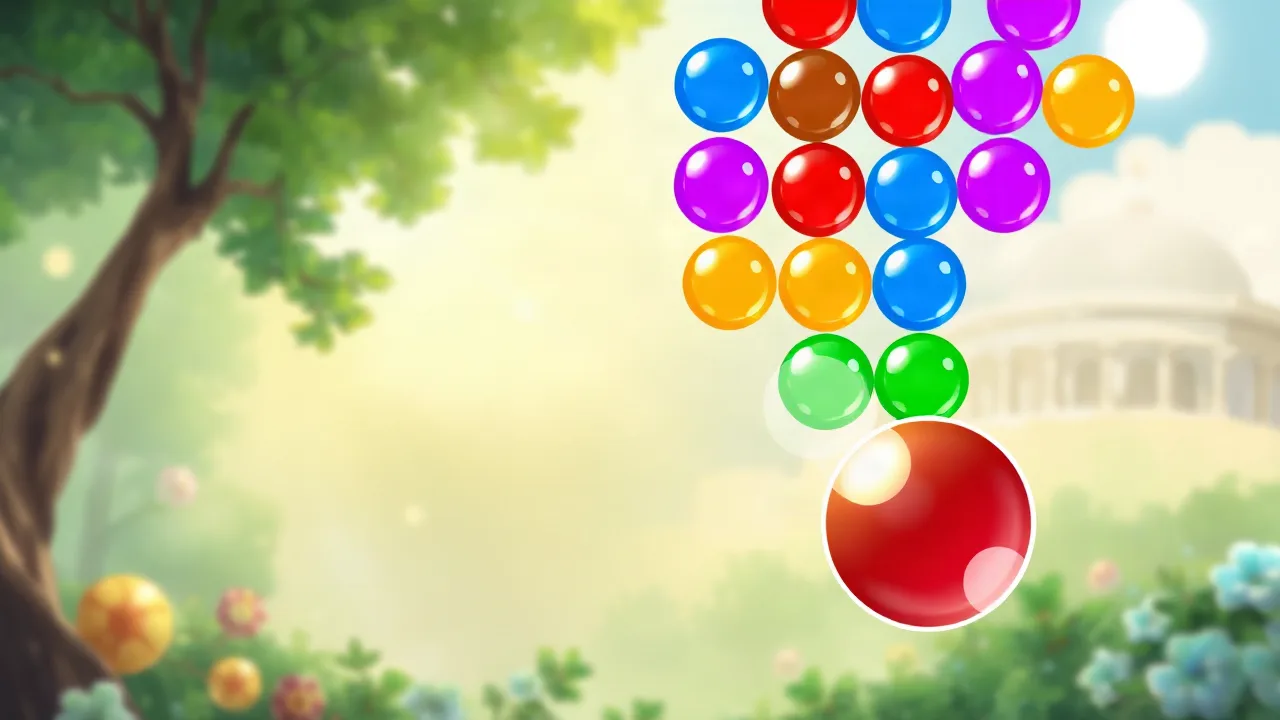
Bubble Shooter is easy to begin because the basic action is visible immediately: aim a coloured bubble, place it beside matching bubbles, and try to clear groups while preserving space. The deeper challenge is planning what the shot changes. A move can remove one cluster, expose a hidden colour, open a lane, or leave the board harder for the next bubble. Strong play comes from balancing the immediate match with the shape you want to create.
Play the verified Bubble Shooter game or browse the AARP Bubble Shooter Online Free collection for related matching pages on CrazyGamesOnline. The collection label helps visitors discover games; it does not mean that every page is operated by, affiliated with, or identical to another organisation's product. Always use the instructions and controls shown in the game you open.
Understand the board before the first shot
Let the play frame load completely and identify the launcher, the current bubble, any preview bubble, and the lower boundary or warning line. Look for large colour groups, narrow gaps, and bubbles that support sections below them. A quick scan prevents the first shot from blocking an important lane.
Check whether the game explains its matching rule, penalties, lives, or special bubbles. Many bubble shooters clear groups when enough bubbles of the same colour touch, but the exact threshold and consequence of a miss can vary. The current game's visible instructions are the final authority.
Aim for useful placement, not only a match
An obvious group is not always the best target. Ask what happens after the bubble lands. Will the shot clear a cluster? Will it connect two areas of the same colour? Will it seal a narrow path? Will it leave the launcher with fewer useful angles?
When several targets are available, prefer a shot that improves both the present turn and the next one. A direct match near the centre may open access to higher bubbles. A side shot may create a bank route for later. A low-value match can still be worthwhile if it preserves board width and prevents the stack from descending.
Use the walls to reach hidden angles
Bank shots are one of the most useful bubble-shooter skills. The side wall can redirect a bubble behind a low cluster or into a gap that a straight line cannot reach. Before shooting, trace the route from the launcher to the wall and then to the target. The angle of reflection should be treated as one continuous line.
Practise bank shots in open situations before attempting them near the lower limit. Small differences in the starting angle can move the landing point. If the game shows an aiming guide, use it to understand the path, but still watch where the bubble actually settles. A guide may show direction without fully representing the final contact and snap position.
Look for supporting bubbles
Some bubbles hold a larger section to the ceiling or upper structure. Clearing a small supporting group can disconnect everything beneath it, producing a much larger result than removing a low cluster one colour at a time. Scan upward and ask which connections keep each branch attached.
A support shot may require preparation. First open a lane, then place a matching bubble, and finally complete the group. Do not force the final angle before the route exists. Planning two or three steps is safer than repeatedly firing at the same blocked target.
Manage colours that have no immediate match
Sooner or later, the launcher will present a colour that does not have a safe matching group. Treat it as a placement problem. Put the bubble where it will not block a valuable lane and where it may connect with the same colour later. Side areas or prepared staging points can be useful, depending on the board shape.
Avoid scattering isolated bubbles across several important routes. One awkward shot is manageable; many unrelated placements create layers that must be cleared before you can reach the top. If a preview bubble is available, use it to decide whether the current colour should build a future group or simply stay out of the way.
Keep the centre and key lanes available
The centre often offers the widest range of future angles. Filling it with unmatched bubbles can make both sides harder to reach. Preserve at least one route toward important upper clusters, and avoid creating a flat low ceiling that leaves no room for bank shots.
Board width matters too. If one side descends much lower than the other, it may become the immediate danger even while the rest of the board looks safe. Use accessible matches to reduce the lowest area, but do not ignore a support opportunity that can remove the same section more efficiently.
A six-turn practice routine
Turn one: scan without rushing
Identify the largest visible groups, the lowest danger area, and one possible support connection. Confirm the current and next colours if a preview is shown. Choose a shot only after you know what space it will occupy.
Turn two: preserve an open route
Take a match or placement that keeps access to the centre or a useful side lane. The goal is not necessarily the largest immediate score. It is to avoid closing the path you may need when a better colour appears.
Turn three: practise a controlled bank
If the board offers a safe opportunity, use one wall to reach a target that is difficult from a straight angle. Watch the actual landing point and use that information to calibrate future rebounds.
Turn four: prepare a support clear
Look for a colour holding bubbles below it. Open the route or add one bubble to prepare the match. If the support is not reachable, improve the angle instead of forcing a low-percentage shot.
Turn five: place an awkward colour safely
If there is no useful match, place the bubble beside a future partner and away from important lanes. Use the preview, when available, so the current shot supports the next one rather than competing with it.
Turn six: reassess the entire board
After several changes, stop using the original plan automatically. Scan again. A new support target may be open, one side may have become dangerous, or a colour may have disappeared from the reachable board. Build the next plan from the current state.
How to recover from a bad shot
A misplaced bubble does not require a panic response. First determine what it blocked. If it closed a lane, look for a match that removes it or a nearby group. If it created an isolated colour, consider using the same area as a controlled staging point rather than adding clutter elsewhere.
Do not spend several risky shots trying to repair one minor error while the lower board becomes more dangerous. Sometimes the better recovery is to stabilise the lowest area, wait for the needed colour, and return to the blocked lane later.
Accuracy and pacing
Release the shot only when the pointer or aiming line is stable. Fast firing can be useful in a timed game, but unnecessary speed causes avoidable placement errors in a turn-based layout. Use a repeatable rhythm: scan, aim, confirm the route, shoot, and observe the new board.
On touch devices, keep the finger movement small and lift only after the direction is clear. If the page scrolls, focus the game frame before the next attempt. On desktop, avoid moving the pointer during release. If animation becomes uneven, close demanding background tabs and allow the current movement to finish.
Do not assume every related game is the same
Related bubble pages may change the matching threshold, introduce limited shots, add special bubbles, use a timer, or alter how the ceiling descends. A strategy that works well in one title may need adjustment in another. Read the individual page and the instructions inside its play frame before relying on a memorised rule.
The words "online" and "free" describe how visitors search for the experience; they do not guarantee access on every network, device, or browser. Local policies and technical compatibility can still affect availability. CrazyGamesOnline does not promise that a game bypasses network restrictions.
Frequently asked questions
Should I always shoot at the largest group?
No. A smaller support group may disconnect more bubbles, and a careful placement may preserve an important lane. Compare the immediate clear with the board shape that remains.
What should I do with a colour that has no match?
Place it where it does not block a key route and where a future bubble of the same colour can reach it. Avoid spreading isolated colours across several lanes.
Why did my bank shot miss?
The starting angle may have been slightly different, or the bubble may have contacted another bubble before reaching the intended point. Practise with open routes and observe the final snap position.
How far ahead should I plan?
Use the current bubble, the preview bubble if shown, and the likely result of the shot. Two purposeful turns are often more useful than a complicated plan that depends on unknown future colours.
How do I know which bubbles are supports?
Trace a section upward toward the ceiling or main structure. Look for the narrow colour connection that keeps the lower branch attached. Clearing that connection may remove the unsupported section, depending on the game's rules.
Make space the goal of every shot
Bubble Shooter becomes more consistent when you judge moves by the space they create or preserve. Learn the current rule set, keep useful lanes open, place awkward colours deliberately, and search for small supports with large effects. Use bank shots as planned routes, not desperate guesses.
After each shot, reassess the board instead of repeating the previous plan automatically. The best target can change as colours disappear and new angles open. A calm cycle of scanning, aiming, observing, and adapting gives you more control than chasing the first available match.