



















What is bad piggies unblocked
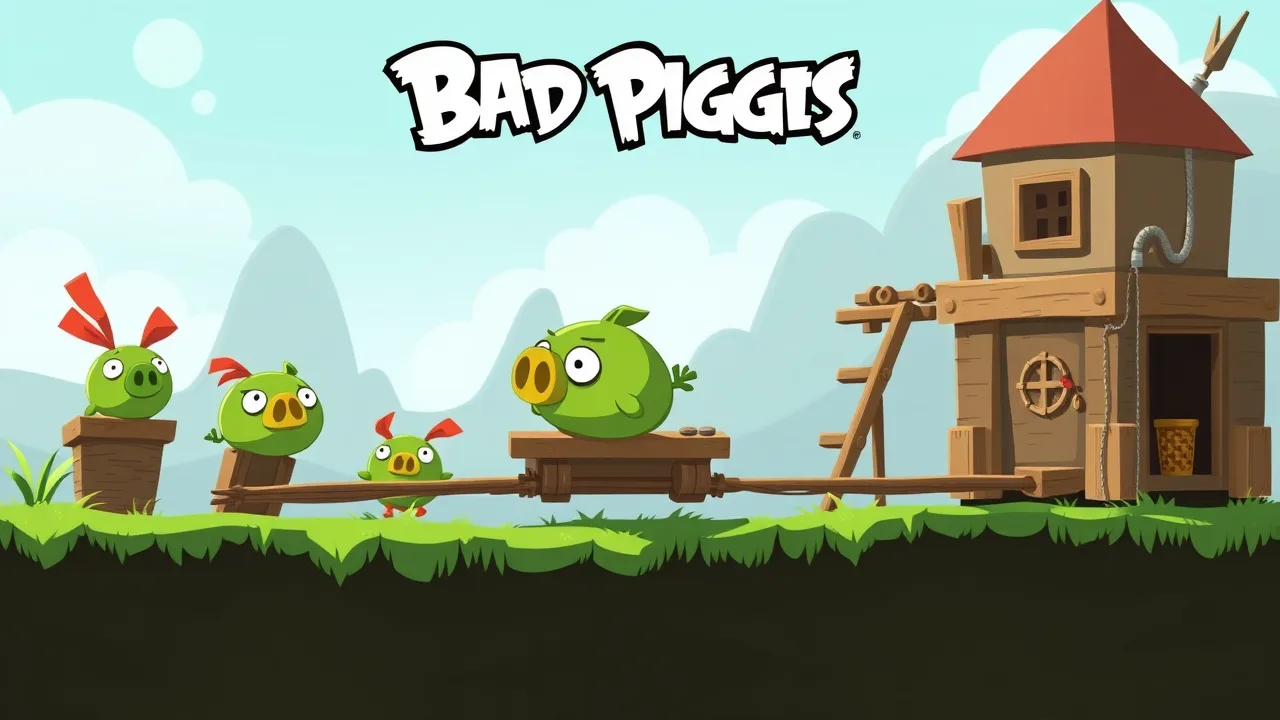
Picture a physics sandbox where your job is to cobble together rickety contraptions that somehow carry a very determined green pig from point A to point B. That is the heart of the classic Rovio spin-off that pushed creativity over brute force. Instead of flinging birds, you’re building machines, testing ideas, and iterating fast. Officially, Bad Piggies launched in 2012 as a spin-off in the Angry Birds series, putting the spotlight on the pigs and the joy of vehicle tinkering.
🕹️ Play instantly in your browser
Short on patience, loaded with curiosity. That’s the ideal mindset. If you want to jump in without installs, try this browser variant right here: play Bad Piggies Shooter. It’s the quickest way to experiment with timing, part combos, and win conditions between tasks. One click, light loading, immediate runs. Keep the pace hot and your iterations faster than your doubts.
🧠 Why the series still slaps in 2025
Physics games age well when they’re honest. Push a box, it rolls. Add a motor, it whirs. Tie a balloon, it floats, then chaos. Bad Piggies nails readable cause and effect, which is why it’s still easy to pick up and hard to put down. The fun isn’t a single “aha.” It’s a spiral of tiny discoveries: this wheel grips better on slopes, that spring is spicy when stacked, these fans are overkill unless you counterweight. That constant feedback loop trains you to think like a scrappy engineer who laughs at duct tape and uses more of it anyway.
🧩 Genre DNA that explains the feel
Under the hood this sits beside construction puzzlers and overlaps with light tower-defense pacing. You’re not defending lanes with turrets, but you are timing, planning paths, and solving bite-size logistics. If you want the big-picture framing, peek at the entry for the broader series to see where this spin-off lives in the family tree of physics puzzlers. A simple way to keep it natural is to say: this is a hands-on branch of the Angry Birds world where creativity is the weapon. For context, here’s a straight-up neutral explainer about the title’s place in the series on Wikipedia.
🏗️ Core loop: build, test, refine
Everything starts on a grid. You get wooden frames, wheels, fans, umbrellas, bellows, motors, rockets, balloons, and a pig who trusts your engineering more than he should. You place parts, hit go, and watch the contraption lurch, glide, or explode in the funniest way possible. The secret isn’t perfection. It’s rapid iteration. Good players don’t build The One Machine. They build five scrappy versions, learn from the fails, and combine the best traits into a run that looks accidental and was absolutely not.
🧰 Starter builds that always teach you something
-
Boxcar basics: four wheels, a box, a pig. If it cannot roll cleanly on flat ground, your frames are crooked or your weight is off.
-
Fan glider: frame plus fans and umbrella. Teaches thrust balance and drag management.
-
Rocket sled: engine on a lightweight frame with two wheels. Teaches why stabilizers matter.
-
Balloon riser: sparse frame, a balloon, later a counterweight. Teaches the cost of lift vs control.
Each of these builds exposes a different law: center of mass, friction, rotational inertia, and the classic “too much power, not enough steer.” That last one is the main character of ninety percent of early failures.
🎯 Why bad piggies unblocked hits for both casuals and grinders
On-ramp is smooth: drop a few parts, grab the star, move on. Ceiling is enormous: optimize fuel usage, switch materials, chain gravity assists. Casual players enjoy messy success that still counts. Advanced players chase perfect lines with three-star routes and minimal parts. The same level feels like a toy box to one person and a lab bench to another. That’s longevity.
🧪 Testing method that speeds up learning
Use a two-pass rule.
Pass 1: build for completion with generously stable parts.
Pass 2: rebuild for elegance with fewer parts and tighter timing.
The mental shift from “just finish” to “finish well” turns random tinkering into disciplined experimentation. You’ll start seeing where drag kills speed, where a lighter body beats a stronger one, and how one tiny wheel change flips the entire result.
🔧 Controls and timing: the real juice
Inputs are simple. The nuance is when you trigger them. Motors and rockets respond better to clean, early direction than to panicked late taps. Balloons are best as mid-air corrections, not launch crutches. Umbrellas are drag tools, not decorations. If you treat every press as an intentional physics nudge, your machines feel smarter immediately.
🧭 Reading the level like a designer
Design tells stories without words. A high ridge before a gap hints at a small jump, not a long flight. Scattered rocks at the bottom of a hill warn that your wheels will bounce unless you widen the base. A mid-air star positioned off the ideal line begs for a micro-thrust or quick umbrella tap. Look for these breadcrumbs. They’re gentle coaching from the map maker.
🧱 Common mistakes and how to fix them
-
Overbuilding: too many parts add weight and failure points. Try one less wheel, one less brace, and see if the line improves.
-
Symmetry obsession: perfect symmetry feels safe but sometimes you need uneven weight to counter torque from a motor.
-
Thrust without control: rockets solve nothing if your chassis flexes like spaghetti. Reinforce key joints first.
-
Brute-forcing hills: a slightly lighter frame with better wheel placement often climbs better than a heavier, stronger one.
🧲 Weight, drag, and torque in plain English
-
Weight: heavy frames resist bounce but need more power.
-
Drag: umbrellas and extra surfaces slow you down. Use them as brakes or not at all.
-
Torque: motors twist. If your nose dips under power, your torque isn’t balanced. Move the motor closer to center or add a counterweight.
🧪 Micro-tech that wins three stars
-
Timed umbrella tap: reduce speed at the crest, avoid overshooting a star.
-
Short-burst rockets: tap-release to keep torque manageable and extend fuel life.
-
Staggered wheels: slightly larger rear wheels help on slopes by lifting the nose.
-
Off-center balloon: gentle nose lift without over-raising the tail.
🏁 A 20-minute improvement plan
Minutes 1–5: beat one level any way possible to learn terrain.
Minutes 6–12: rebuild the machine with half the parts. Try to keep top speed but reduce weight.
Minutes 13–20: chase a three-star run with timed inputs. Record your best attempt and copy the timing rhythm next round.
🧨 Progression curve that feels fair
Early stages teach clean rolling and gentle jumps. Middle chapters add verticality, part combinations, and stars that force risk-reward choices. Late maps expect you to counterbalance torque, manage mid-air corrections, and budget power like a cheapskate. This curve mirrors how the original title introduced gadgets over time, letting your brain adapt while still throwing curveballs. The series’ focus on build-then-pilot has been there since the start and is a big reason critics and players gave the launch strong reception.
🧭 Targeted advice for creators and streamers
-
Keep your edit punchy: 15–30 seconds of build highlights and a clean final run.
-
Overlay a tiny input timeline so viewers see exactly when you trigger motors and balloons.
-
Title tip: mention the part combo and the map theme. People search for very specific problems when they’re stuck.
🧒 Parent’s corner
The core challenge is mechanical thinking, not reaction speed. It’s a smart pick for kids who like Lego and tinkering. Suggest a simple rule: every new machine must use one fewer part than the previous attempt. That guideline quietly teaches optimization.
🧭 Controls guide for bad piggies unblocked
-
Place parts with intent: center of mass slightly forward for slopes, slightly rear for bumps.
-
Time thrusts: short power pulses keep frames stable.
-
Use drag as a brake: umbrellas tame overshoots.
-
Correct mid-air: tiny balloon taps save sloppy launches more reliably than holding thrust and praying.
🤝 How to learn faster with checkpoints
When a level has checkpoints, treat each as a lab. Build a first-section machine, learn the rhythm, then rebuild specifically for the second section’s slope and gap. Mixing one do-everything contraption is cool, but specialized half-machines often beat time by a mile.
🧭 From casual clear to optimized line
Once you can finish, set a mini-rule: fewer parts than last run, smoother landings, and no panic thrust. If you can reproduce the same result three times in a row, you’ve actually learned it. That repeatability matters more than a lucky perfect run.
🛠️ Troubleshooting: why your build keeps flipping
-
Nose-down under power: motor torque plus front-heavy frame. Slide weight backward or stiffen front joints.
-
Tail slap on landing: rear is too light or wheels are too small. Beef up the back or add a micro-brace.
-
Bounce city: wheels too close together or frame too rigid. Widen stance or allow a little flex.
🚀 Intermediate challenges to push your ceiling
-
Two-part relay: build a launcher and a finisher. Transfer the pig mid-course.
-
Fuel budget run: limit yourself to half fuel and achieve all stars.
-
No-wheel glide: you’ll hate it, then love it when you finally thread the gap.
🎯 Why bad piggies unblocked keeps people hooked
Tinkering scratches the builder brain. Short levels respect your time. Failures are funny, not punishing. Most of all, the learning is visible. Yesterday you bolted parts at random. Today you’re balancing torque like a tiny aerospace shop. That glow-up is addicting.
🧠 Mindset that turns pain into progress
Keep notes. What worked, what failed, what your timing was when it felt perfect. If a part underperforms, test it alone in a tiny frame on flat ground. Treat the game like a physics notebook and your results will jump.
🧭 Community wisdom in one sentence
Light, balanced, and controlled beats heavy, loud, and chaotic in almost every map. Even players who analyze this title’s physics in public love how elegant solutions tend to win over brute force.
❓ FAQ about bad piggies unblocked
Q: Does the original title still matter for learning today?
A: Yes. The fundamentals of building, balancing weight, and timing thrusts haven’t changed. The lessons transfer cleanly from old levels to fresh browser spins.
Q: What’s the fastest way to three-star a tricky stage?
A: Build a stable clear first, then rebuild for weight reduction and timed inputs. Most three-stars appear after you remove one part and stop holding thrust.
Q: How do I stop flipping on steep slopes?
A: Lower your center of mass and widen the wheelbase. If it still flips, move your motor closer to center and pulse the throttle.
Q: Is there a single best part I should always add?
A: No. Parts are context tools. Wheels set the baseline, but the right brace or balloon at the right time can outperform more power by a mile.
Q: Can kids play comfortably?
A: Absolutely. The challenge is problem-solving and patience. Use short sessions and celebrate clever fixes, not just fast finishes.
Q: Why do minimal builds feel faster?
A: Less weight means quicker acceleration and shorter braking distance. When you combine that with cleaner timing, you float through sections that felt impossible earlier.
Q: Any tip to learn timing without getting overwhelmed?
A: Count beats out loud. Tap-tap for thrust, pause for glide, tap to correct. Your hands will catch up to your brain quickly.
🌟 Final thoughts and where to start
If you’re itching to tinker, start with a boxcar, switch to a rocket sled, then graduate to a fan glider. Chase a clean finish, then rebuild lighter and smoother. When you want a fast browser run that respects your time, hop over to play Bad Piggies Shooter and give yourself three attempts to beat a level with fewer parts. You’ll feel the moment when the machine stops fighting you and starts dancing.