


subway surfers zurich Full Guide: How to Play, Tips, and More
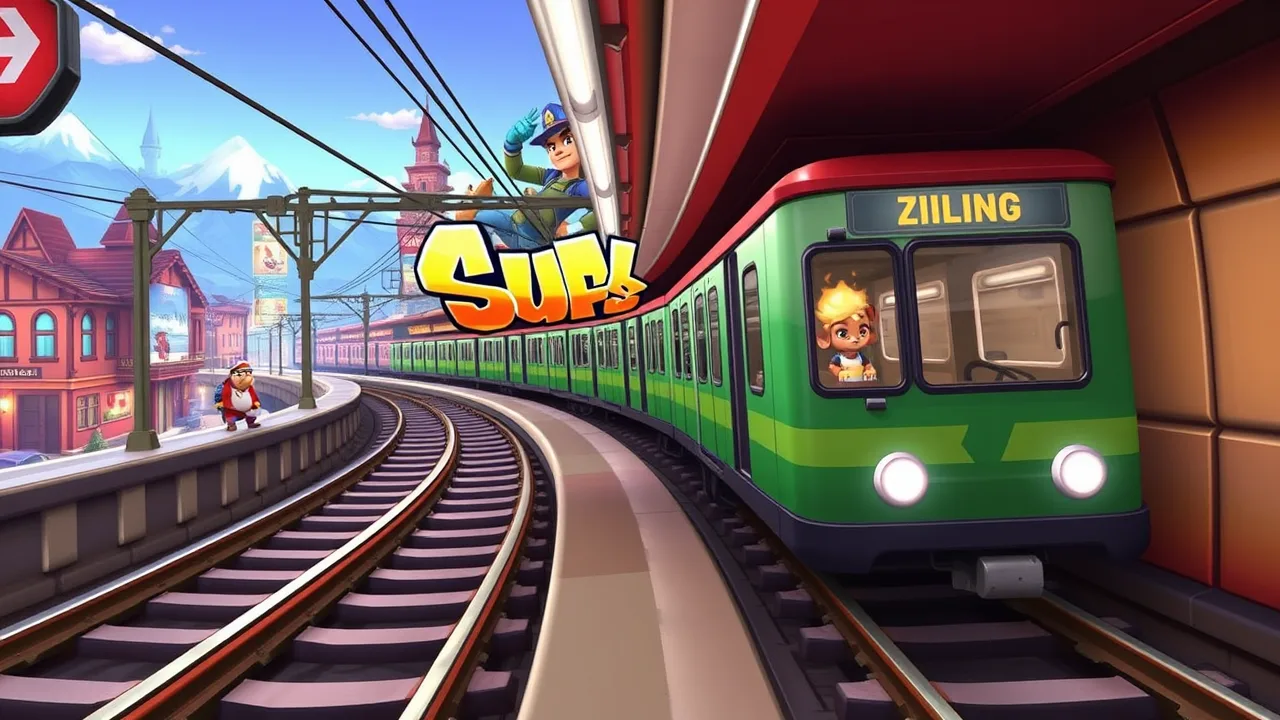
Bright rails, alpine billboards, and a chase that never stops—subway surfers zurich takes the classic runner you know and gives it a postcard-Swiss spin. It’s fast, colorful, and designed for “one more run” momentum: hop, roll, dash across trains, and thread through tunnels as the inspector and his pup push you to keep moving. Whether you’re a first-time surfer or a veteran chasing fresh personal bests, this city reskin adds just enough novelty to refresh your muscle memory while staying faithful to the endless flow you love.
Play subway surfers zurich now ohttps://www.crazygamesonline.com/ by clicking here: subway surfers zurich.
In this guide you’ll learn:
-
What makes this Zurich tour tick (and how it fits the broader Subway Surfers formula).
-
A crisp, step-by-step onboarding plan for your first hour.
-
Score systems explained like a stopwatch: how multipliers, power-ups, and mission streaks actually compound.
-
Movement tech—from perfect lane swaps to buffered inputs—that turns luck into repeatable skill.
-
Device and settings tweaks that make a visible difference.
-
Similar same-domain games/blogs to keep your flow going.
2) What is subway surfers zurich? 📖
subway surfers zurich is a city-themed entry in a long-running endless running formula: you sprint forward along multi-lane tracks, dodge obstacles, and collect currency/power-ups while the pace ramps until you inevitably crash. The objective isn’t “beat the level,” it’s extend the streak—survival, score, and collection in one kinetic loop. Because you play it right in your browser, it’s frictionless to start, easy to return to, and perfect for micro-sessions.
Mechanically and platform-wise, it’s an endless runner you can play in the browser—as defined by Endless runner and Browser game.
3) How to Play subway surfers zurich 🕹️
Core loop: See → Decide → Move → Collect → Extend.
Your hands perform the choreography; your eyes manage the schedule.
Default inputs (keyboard or swipe)
-
Left / Right: Change lanes
-
Up: Jump (fences, barriers, train couplers)
-
Down: Roll (signs, low bars, tunnel lips)
-
Space / Tap icon: Activate hoverboard (safety + speed for a limited time)
-
Double-tap (mobile): Often triggers hoverboard too
-
Pause/Restart: Quick refocus between streaks
(On touch devices, swipes map one-to-one to these actions.)
A first-hour plan that actually works
Minutes 0–5 — Sight read & slow rhythm
Run without chasing coins. Watch where Zurich places its early patterns—split tracks, twin trains with low bars, and billboard tunnels. Your first goal isn’t score; it’s reading. Note two common transitions you’ll see repeatedly (e.g., fence → low bar → gap on an S-bend).
Minutes 5–10 — Clean three-step sequences
Drill a single micro-sequence until it feels automatic:
-
Jump → Left → Roll or Right → Jump → Right (whatever Zurich throws most in your first runs).
Keep the speed modest; the mission is wiring buffered inputs (queuing your next move during the animation of the current one).
Minutes 10–20 — Coin lines with safety
Collect only the center lane coins unless your next move is 100% clear. If the coin line pulls you into a sketchy gap, skip it. Discipline now pays off when the pace spikes.
Minutes 20–30 — Power-up literacy
Run with a single focus each attempt: jetpack, magnet, 2× multiplier, or super sneakers. Learn how each changes your pathing. Example: with sneakers, your jump arc clears longer rooftop spans but makes you vulnerable to low bars on landing—buffer a Down input as you descend.
Minutes 30–60 — Mission batching & hoverboard habit
Work missions in batches (e.g., “roll under 30 obstacles”) to bank keys/coins. Meanwhile, hoverboard on danger: if you see a blind merge or a sudden two-train squeeze, pop the board. Treat it as an airbag for your streak, not a style prop.
4) Top Tips & Strategies 💡
A) Movement fundamentals (that scale forever)
-
Early eyes, late hands. Look two obstacles ahead; trigger inputs as late as safely possible so you don’t commit to the wrong lane.
-
Buffer inputs. You can queue Down during a Jump or Left during Roll; the next action fires at the earliest valid frame. This turns “impossible” chains into muscle memory.
-
Center bias. When in doubt, center lane gives the most options: you can bail left or right without slamming a wall.
-
Diagonal logic. A Jump + Left/Right moves you diagonally to skip awkward couplers. Practice this in slow sections first.
B) Reading Zurich’s track language
-
Tram pairs. Side-by-side trams often create a high→low pattern: jump a barrier on the left track, immediately roll under signage on the right.
-
Billboard tunnels. Lighting shifts signal low-clearance zones. Enter Down-ready; pop up after the last lip and swap lanes.
-
Y-splits. When rails fork, coins bait you toward the narrow side. If the camera angle hides what’s next, take the wider branch and board-buffer the first decision.
C) Scoring math (simple and decisive)
-
Multipliers stack vertically. A 2× multiplier doubles every coin; combine with magnet to hoover entire lines you’d otherwise ignore.
-
Distance > greedy coins. A safe 90-second streak crushes a reckless 30-second sprint. Think streak-first, coins-second.
-
Missions and keys = compounding. The more missions you clear, the more keys to extend runs or unlock skins/boards that add utility perks (cosmetics + comfort). Batching missions accelerates this loop.
D) Power-up micro-guides
-
Jetpack: Pure safety; obstacles disappear. Prioritize S-curve coin lines and use the final second to center before you land.
-
Coin magnet: Your pathing can stay safe; coins come to you. Resist over-steering for strays—let the magnet work.
-
2× Multiplier: Activate safely, then play conservatively for 20–30 seconds. This window defines your PBs.
-
Super sneakers: Great for clearing spaced trains; risky near low bars. Always buffer Down near tunnel exits.
-
Hoverboard: Use on blind merges, rapid fences, or when your sequence memory falters. It prevents a single hit from ending the run, turning disasters into dents.
E) Hoverboard discipline (pro habit)
-
Plan triggers. Board when visibility drops (curves, merges, stacked trains).
-
Reset routine. After a save, re-center and breathe for half a second; panicked over-inputs cause back-to-back crashes.
-
Stack with sneakers? Sneakers + board is powerful but can create long landing lag—keep a roll queued.
F) Lane choreography (repeatable patterns)
-
Fence → fence → low bar: Up, buffer Up, then Down as your feet touch.
-
Coupler hop → billboard lip: Up diagonally to a safer lane; Down on the shadow cue.
-
Crate zigzag: If wood crates split three lanes, choose the lane with visible exit (look for coin line continuity); avoid dead-ends with no coin indicators.
G) Streak psychology 🧠
-
Set a governor. Promise yourself: “No risky coin grabs before 1:00.” Your nervous system relaxes; your inputs smooth out.
-
One fix per run. Don’t chase five improvements at once. If today’s fix is “late hands,” judge success only on that.
-
Break plateaus with micro-goals. “Roll 20 obstacles” or “survive 3 billboard tunnels clean” generates momentum when raw score stalls.
5) Why subway surfers zurich Is So Addictive 🔁
It’s mastery you can feel
You’re not grinding stats—you’re sharpening timing and vision. Every failure has a crisp cause: jumped early, rolled late, lane-swapped blind. Fix one thing and your next run lasts longer. That tight feedback loop is pure dopamine.
Risk with a parachute
Hoverboards and power-ups let you take smart risks without catastrophes. You learn to push, recover, and push again—progress without punishment spirals.
Fresh scenery, familiar grammar
Zurich’s rails, trams, and tunnel signage remix the visual language you already know. That means novelty without relearning fundamentals—a perfect combo for long-term fans.
Micro-session friendly
From boot to run is seconds. Five minutes is enough to tick a mission, try a new line through a tram pair, and bank a new best—then get back to work or class.
6) Similar Games/Blogs You’ll Love 🧭
All picks are from the same domain so you keep the smooth CrazyGamesOnline flow:
-
See also: Subway Surfers Monaco — glittering seaside sprinting with classic train patterns and coin arcs.
-
See also: Subway Surfers New York — long straights and quick billboard tunnels that teach late-hands discipline.
-
See also: Subway Surfers Berlin — mural-vibe levels and tight urban gaps; great for roll timing.
-
See also: Subway Surfers San Francisco — rolling hills and curve reads; a good test for hoverboard triggers.
-
See also: Subway Surfers Zurich — 2025 Mega Guide — a deep same-domain strategy blog to complement this overview.
7)https://www.crazygamesonline.com/https://www.crazygamesonline.com/? ⚡
Instant, no-download access
Click, load, and you’re sprinting through Swiss rails in seconds. No installers or patches; just the game canvas up front.
Consistent performance
The page is lightweight and restart-friendly, so input latency stays low—vital when you’re threading billboard tunnels with frame-tight rolls.
Great on keyboard, mouse, or touch
Runs clean on desktop and mobile. Short sessions are painless; long grinds feel smooth thanks to quick restarts and responsive inputs.
Built-in discovery
When you’re ready to change scenery, adjacent world tours and other endless runners are a click away (see the Similar section). You keep momentum without jumping sites.
Ready to surf the Zurich rails? Jump in now and play
8) Conclusion ✅
subway surfers zurich is the perfect refresher course for endless-runner fans: crisp lanes, readable obstacles, and just-different-enough layouts to sharpen your instincts. Learn to look early and act late. Buffer inputs so sequences chain themselves. Treat hoverboards like airbags, not decorations. Stack multipliers when your path is clean; ignore hero coin grabs when vision is dirty. With a few simple habits—center bias, diagonal hops, buffered rolls—you’ll convert “lucky runs” into repeatable high scores.
The magic isn’t in grinding; it’s in getting one percent smoother every try. Zurich’s rails are waiting.
9) FAQ ❓
Q1: What’s the single best habit for beginners?
Adopt a center-lane bias and practice buffered inputs (queue your next move before the current animation ends). You’ll escape more bad angles and survive longer at high speed.
Q2: When should I use the hoverboard?
Pop it on blind merges, stacked trains, and billboard tunnels—any time visibility or reaction time drops. It converts hard crashes into recoverable bumps.
Q3: How do I stop clipping low bars after long jumps?
With super sneakers or long jumps, buffer Down as you descend. The roll should trigger the moment you land to slide under the first low bar.
Q4: Coins or distance—which matters more for score?
Distance and multipliers matter most. Use magnet to collect safely while you path for survival; skip risky coin lines if they steal vision or force early inputs.
Q5: Any quick routine to break a plateau?
Run 10 minutes of discipline drills:
-
3 minutes center-lane only (stability).
-
3 minutes practicing diagonal hops over couplers.
-
2 minutes hoverboard on every blind corner to rehearse timing.
-
2 minutes conservative 2× multiplier play (no greedy coins).
Then make one personal change (e.g., “later hands”) your only goal for the next PB attempt.